


 English
 中文简体
中文简体
 عربى
عربى

Content
What a WPC Door Frame Is and Why It Matters
A WPC door frame is manufactured from Wood Plastic Composite, a material created by blending wood fiber with thermoplastic resins and performance additives. This structure combines the natural appearance of wood with the durability of plastic, making it especially suitable for environments where traditional wooden frames fail. Unlike solid wood, WPC door frames do not absorb moisture easily, resist insect damage, and maintain dimensional stability over long-term use.
In modern residential, commercial, and hospitality projects, door frames are no longer just structural components. They play a role in insulation, longevity, and maintenance costs. WPC door frames address these functional demands while supporting consistent mass production and uniform quality.
Key Performance Advantages of WPC Door Frames
The growing adoption of WPC door frames is driven by their performance benefits in real-world applications. These advantages are particularly evident in humid, coastal, or high-traffic environments where conventional materials degrade quickly.
- Water and moisture resistance, preventing swelling, cracking, and mold growth
- Termite and insect resistance without chemical treatment
- High dimensional stability under temperature changes
- Smooth surface suitable for lamination, PVC film, or direct painting
These characteristics make WPC door frames a reliable long-term solution, especially in bathrooms, kitchens, hospitals, hotels, and prefabricated buildings.
Manufacturing Structure and Material Composition
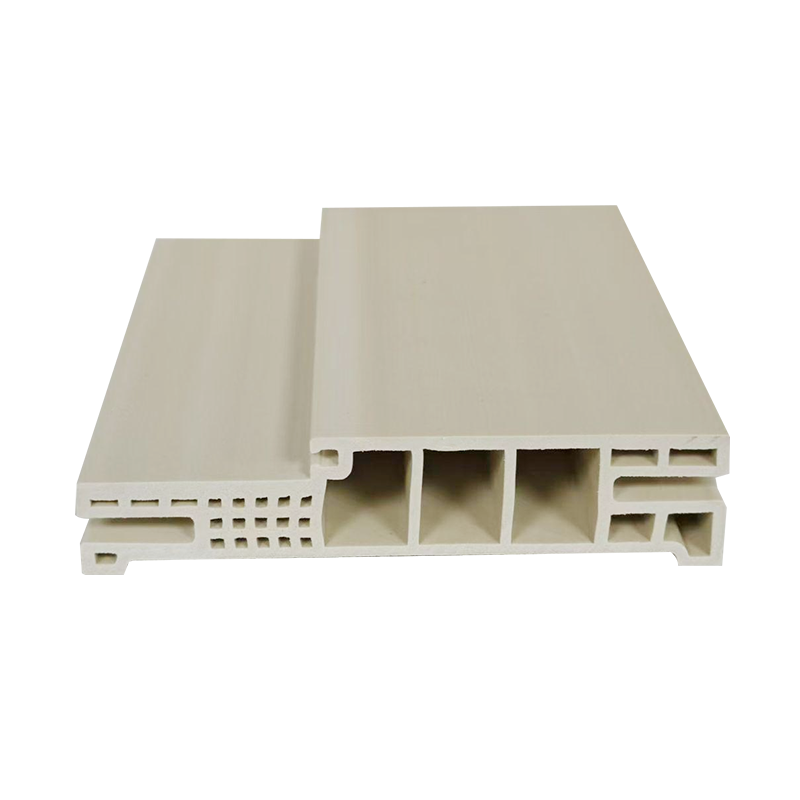
Understanding the internal structure of a WPC door frame helps buyers evaluate quality. High-grade WPC frames are produced using extrusion technology, ensuring consistent density and precise cross-sectional dimensions.
Typical Material Composition
| Wood Fiber | Provides rigidity and natural texture |
| Thermoplastic Resin | Improves water resistance and flexibility |
| Additives | Enhance UV resistance, bonding, and stability |
This engineered composition allows the door frame to be cut, drilled, and fastened like wood while maintaining superior durability.
Installation Benefits for Contractors and Builders
WPC door frames simplify on-site installation and reduce labor challenges. Their uniform density prevents unexpected splitting during nailing or screwing, which is a common issue with solid wood frames.
Pre-grooved designs and customizable profiles allow easy alignment with doors, wall thicknesses, and architraves. This flexibility is especially valuable for large-scale housing projects where speed and consistency directly impact costs.
Applications Across Residential and Commercial Spaces
WPC door frames are suitable for both interior and semi-exterior use. Their resistance to humidity and cleaning chemicals makes them a preferred choice in demanding environments.
- Residential apartments and villas
- Hotels, resorts, and serviced apartments
- Hospitals, laboratories, and clean rooms
- Modular and prefabricated buildings
In these settings, WPC door frames help maintain structural integrity while reducing long-term maintenance and replacement frequency.
Maintenance, Lifespan, and Cost Efficiency
Unlike traditional wooden frames, WPC door frames do not require regular painting, polishing, or anti-termite treatments. Routine cleaning with water or mild detergents is sufficient to keep the surface intact.
From a lifecycle cost perspective, WPC door frames offer a lower total cost of ownership. Their long service life, combined with reduced maintenance and fewer replacements, delivers measurable savings for property owners and developers.


