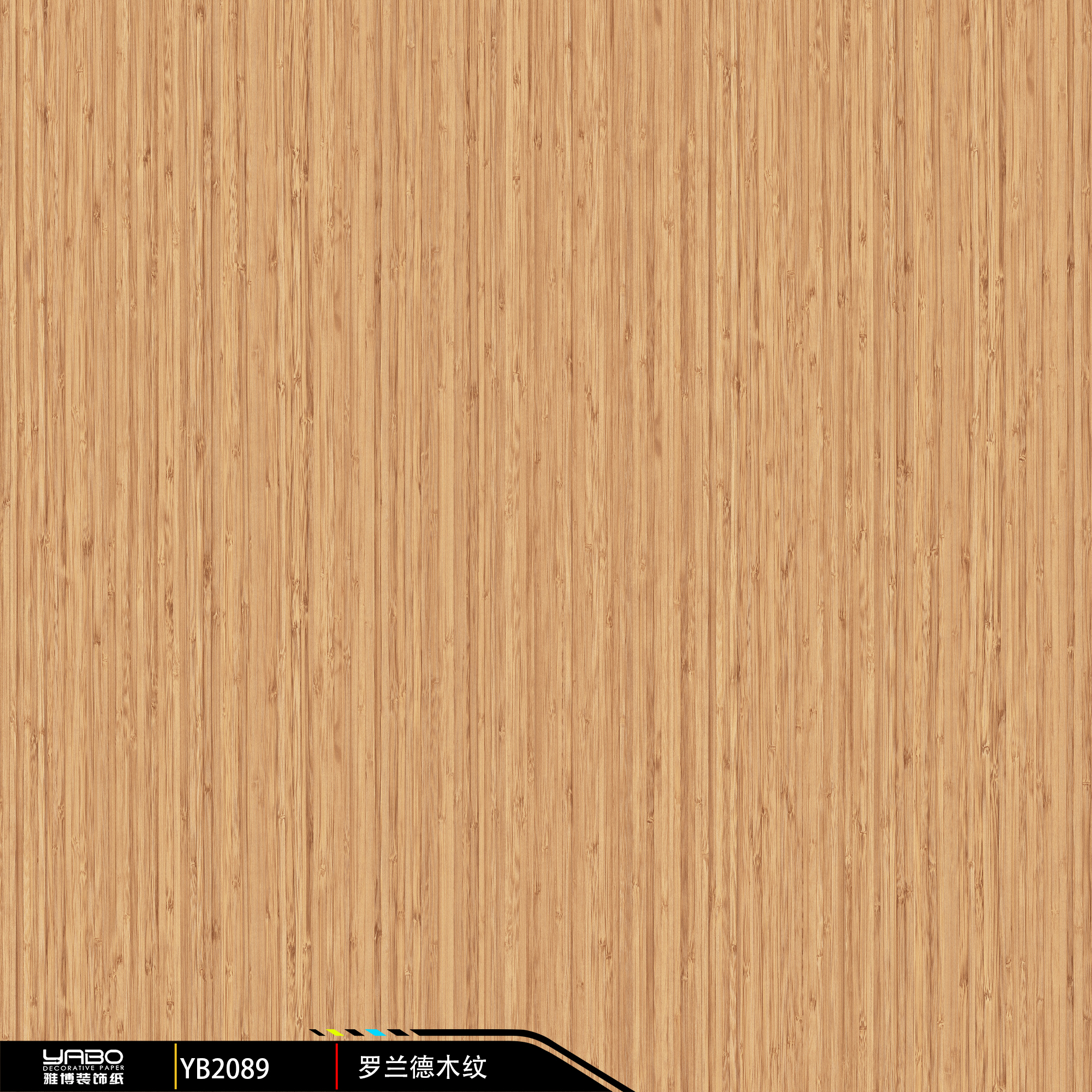
MELAMINE DECORATIVE PAPER from Hangzhou Lanyun
Hangzhou Lanyun New Materials Co., Ltd. supplies melamine decorative paper as a core surface material for door skins, flat panels and furniture components. As a MELAMINE DECORATIVE PAPER manufacturer in China, we produce a broad decor range in two formats — narrow sized and wide sized — so door lines and panel plants can match paper width to their press and cutting layout.
The range is built for laminating onto MDF, particleboard, plywood and WPC substrates, and for wrapping or pressing onto door skins where a durable, repeatable decor surface is required. Our production base in Hangzhou combines extrusion, coating and paper converting under one organization, which lets us coordinate decor, substrate and finished door supply for projects that need a consistent surface across multiple components.
Product Range and Format Logic
Melamine decorative paper is supplied in two width families. The choice between them is driven by the panel or profile being covered, the press or wrapping line, and the amount of trim waste the plant can absorb. Both families share the same decor library and surface treatment options, so a project can specify one visual across doors, frames and panels.
| Format |
Typical Use |
Line Fit |
Selection Driver |
| Narrow Sized Melamine Paper |
Door frames, architraves, edge bands, narrow profiles |
Wrapping, profile lamination, narrow press belts |
Roll width matched to profile width; low trim loss |
| Wide Sized Melamine Paper |
Door skins, flat panels, furniture boards, large surfaces |
Flat press, continuous press, large-format lamination |
Panel size and grain direction; press width |
Narrow sized paper is the practical choice when the covered face is a frame, architrave or edge detail. Wide sized paper covers full door skins and panel faces in one pass, reducing seams and handling. We keep both formats in the same decor families so a door set can use wide paper on the leaf and narrow paper on the frame without a visible mismatch.
Application Fit Across Door and Panel Production
The paper is designed for the surfaces that define how a door reads in service: the leaf face, the frame, the architrave and any flat panel component. In door production, melamine paper is typically pressed or wrapped onto a prepared substrate and then finished with edge treatment. The decor must survive sanding, trimming, hinge and lock machining, and daily cleaning without hazing or delamination.
- Door skins and leaves: wide paper for full-face coverage; consistent grain alignment across a batch.
- Frames and architraves: narrow paper for profile wrapping; tight radius capability depends on paper grade and line setup.
- Flat panels and furniture: wide paper for board lamination where a uniform decor surface is required.
- WPC and composite doors: paper selected for adhesion to the specific substrate and press cycle used by the plant.
Because we also produce COMPLETE DOOR sets and RAW MATERIAL components, we understand how paper choice interacts with door construction. That context matters when a project needs the paper to match an existing door finish or to run on a specific press.
Critical Specifications and Configuration Options
A melamine paper specification is more than a decor name. The working specification includes base paper weight, resin content, volatile content, tensile strength, width and roll length, and the surface finish. These variables determine how the paper behaves in pressing, wrapping and trimming, and how the finished surface performs in service.
| Parameter |
Why It Matters |
What We Confirm With You |
| Base paper weight |
Affects opacity, hand feel and press behavior |
Target grammage range for your press cycle |
| Resin content |
Controls cure, adhesion and surface hardness |
Resin system matched to substrate and temperature |
| Width and roll length |
Determines trim waste and line uptime |
Exact slit width and roll format for your line |
| Surface finish |
Sets gloss level, texture and cleanability |
Matte, satin, gloss or textured options |
| Decor and grain direction |
Defines visual continuity across components |
Decor code, repeat and orientation |
We configure the paper around the working point of your line: press temperature, pressure, cycle time and substrate. Where a project requires a specific decor, we match it from our library or develop a custom print. The same decor can be supplied in both narrow and wide formats, which simplifies inventory for plants that cover both profiles and flat faces.
Capacity, Quality and Supply Reliability
Hangzhou Lanyun operates a production facility covering more than 20,000 square meters, with a factory area of 10,000 square meters. The site runs more than 12 WPC door extrusion lines and 10 coating lines, with annual capacity of 300,000 WPC door sets and 150,000 melamine wooden door sets. This scale supports stable paper supply and gives us direct experience with how paper performs on high-volume door lines.
Quality control starts at raw material intake. We screen and audit paper and resin suppliers, test incoming material, and compare batches before release to production. For melamine paper, that means checking base paper weight, resin pickup, width tolerance and visual consistency against the approved sample. Batch records are kept so a repeat order can be traced to the same specification.
- Incoming inspection: base paper and resin checked against agreed specification.
- In-process control: width, resin content and surface appearance monitored during converting.
- Batch retention: approved samples retained for comparison on repeat orders.
- Supply planning: ERP-supported scheduling to keep repeat decor lines available.
Customization and Integration Support
We develop and produce products according to drawings or samples provided by customers. For melamine paper, customization covers decor development, width slitting, roll length, surface finish and packaging format. If you are matching an existing door finish, we work from a physical sample or a color target and produce a trial roll for your line before committing to a production run.
Integration support focuses on the points where paper meets your process: press parameters, adhesive or resin compatibility, trimming and edge treatment. Our technical team reviews the substrate and line conditions with you and recommends a paper grade and format. Where the paper is part of a larger door package, we coordinate with our WPC Flat Door and WPC Door Frame production so the decor matches across components.
Information We Use to Configure Your Solution
To prepare a suitable paper specification and quotation, we need the working details of your application. The list below is the minimum we use; additional detail on line conditions helps us narrow the recommendation faster.
- Substrate: MDF, particleboard, plywood, WPC or other, with density and surface preparation.
- Component: door skin, frame, architrave, flat panel or profile, with dimensions.
- Line type: flat press, continuous press, wrapping or profile lamination, with temperature and pressure range.
- Format: required width, roll diameter and roll length, and core type.
- Decor: existing code, physical sample or color target, plus grain direction and gloss level.
- Volume: trial quantity, repeat order pattern and annual demand.
- Acceptance: the surface and adhesion tests your plant applies to incoming paper.
Packaging, Documentation and Delivery Scope
Paper is supplied in rolls with protective wrapping and identified by decor code, width, length and batch number. Packaging is specified to suit the transport mode and the handling equipment at your plant. For export orders, we prepare the commercial and shipping documents required for the destination, and we confirm the roll format and pallet configuration before dispatch.
Documentation includes the approved sample record, batch identification and the specification sheet for the supplied paper. Where a project requires test data, we discuss the applicable test methods with you and provide the results we hold for the supplied batch. Training and technical support are handled by our technical service team, who can review press settings and troubleshooting with your line staff.
Frequently Asked Questions
What is the difference between narrow sized and wide sized melamine paper?
Narrow sized paper is slit to the width of a profile, frame or edge detail, which reduces trim waste on wrapping and profile lines. Wide sized paper covers full door skins and flat panels in one pass. Both use the same decor library, so a door set can combine wide paper on the leaf with narrow paper on the frame.
Can you match a decor to an existing door or panel finish?
Yes. We work from a physical sample, an existing decor code or a color target. For a new match, we produce a trial roll so your line can confirm the appearance and press behavior before a production order is placed.
What information do you need to quote a melamine paper specification?
We need the substrate, the component being covered, the line type and press conditions, the required width and roll format, the decor target and the expected volume. With those details we can recommend a paper grade and prepare a quotation against a defined specification.
How do you control batch-to-batch consistency?
We screen and audit raw material suppliers, test incoming paper and resin, and compare each batch against the approved sample before release. Batch records are retained so repeat orders can be traced to the same specification and decor.
Do you supply melamine paper for WPC door production as well as wooden doors?
Yes. Our paper is used on WPC door skins, frames and panels as well as melamine wooden doors. Because we also produce WPC doors and components, we can coordinate the paper specification with the door construction and finishing process.



 English
 中文简体
 عربى