


 English
 中文简体
中文简体
 عربى
عربى

If you build doors, cabinets or furniture panels for a living, the number that decides your material order is rarely the decor name. It is the roll width. Narrow sized melamine paper is the format engineered for the smaller, tighter components that a full-width roll cannot serve efficiently: door skins, edge strips, mouldings and the profiled faces of WPC door frames and architraves. It carries the same printed decoration as its wider cousin, but it arrives in dimensions that match the way those parts are actually pressed, wrapped and laminated.
We have supplied both formats for years, and the questions we hear from door factories and trade buyers are always practical ones: which width, which decor, which base weight, and how to keep the colour consistent from one roll to the next. This guide walks through all of it.
Content
- 1 What "Narrow Sized" Really Means
- 2 How Narrow Sized Melamine Paper Is Produced
- 3 Narrow Versus Wide Sized Paper at a Glance
- 4 Where Narrow Sized Paper Earns Its Place
- 5 Choosing a Decor That Works With the Whole Door
- 6 A Simple Quality Checklist Before You Order
- 7 Working With a Manufacturer Who Knows Your Line
What "Narrow Sized" Really Means
Melamine decorative paper begins life as a printed base paper. The paper is printed with a woodgrain, stone or abstract design, then impregnated with melamine resin and dried until it reaches a partly cured state. When heat and pressure are applied during lamination, the resin flows and cross-links, forming a hard, sealed surface that needs no paint or varnish on top.
The "narrow sized" label describes how that paper is finished and delivered, not what it looks like. Narrow grades are produced in smaller roll widths and are usually intended for:
- Wrapping and laminating narrow surfaces such as door frames and architraves
- Door skins and door core panels, where the sheet is cut to component size
- Edge strips and profile wrapping, where a tight radius must be covered without cracking
- Furniture mouldings, drawer fronts and small cabinet parts
Wide sized paper, by contrast, is aimed at full panel lamination on larger presses, where one broad sheet is laid over an entire board in a single pass. Both products may share the same printed decor library, but they are engineered for different machines and different part geometries. Buying wide paper for a wrapping line, or narrow paper for a full board press, usually shows up later as waste, tearing or an uneven surface.
How Narrow Sized Melamine Paper Is Produced
Production starts with ink colour adjustment. Each decor is matched to a master standard under controlled lighting, and the printing cylinders are set so that grain lines, pores and shadow details register correctly from the first metre of the run to the last. The printed web is then dried, impregnated with melamine resin in a controlled bath, and passed through a drying tunnel that brings the resin to a stable, partly cured stage.
From there the paper is slit to the required narrow widths and rewound. Every step leaves a fingerprint on the final product, which is why three variables deserve your attention before you place a bulk order:
- Print registration - misaligned cylinders show up as doubled grain lines or blurry knots.
- Resin pickup - too little resin and the surface will not seal; too much and the paper becomes brittle during wrapping.
- Residual moisture and volatiles - these control how the paper behaves in the press and whether bubbles appear under the finished surface.
If you would like a plain-language explanation of the format before you start comparing suppliers, our team has written a short introduction to narrow sized melamine paper and why furniture makers rely on it.
Narrow Versus Wide Sized Paper at a Glance
The table below summarises the differences that matter most when you are specifying paper for a production line.
| Point of comparison | Narrow sized melamine paper | Wide sized melamine paper |
|---|---|---|
| Roll width | Matched to profile and component width | Matched to full panel width |
| Main application | Profile wrapping, door skins, frames, architraves, edge strips | Full board lamination and large flat surfaces |
| Typical equipment | Wrapping machines, profile lines, smaller presses | Large presses and continuous laminating lines |
| Behaviour on tight radii | Flexible when resin content is balanced | Limited |
| Decor library | Woodgrains, stone and technical wood | Woodgrains, stone and technical wood |
| Best suited to | Door and furniture component makers | Panel and board producers |
Where Narrow Sized Paper Earns Its Place
In a WPC door plant, narrow paper rarely sits at the centre of the process the way a full laminate sheet does. Instead it quietly handles the parts that decide whether a finished door looks sharp or slightly off. A wrapped door frame hides its joints behind a continuous grain pattern. An architrave profile carries the same woodgrain as the door leaf beside it. A door skin takes the decor across a flat or gently profiled face without telegraphing the substrate underneath.
- WPC door frames and door architraves, where the paper must follow a curve without splitting
- Door skins and core panels for flat, carved and assembled door ranges
- Edge strips and narrow trims that tie a door leaf to its surround
- Furniture mouldings and small parts that share the same decor family
Because these parts are visible and often sit side by side on the same installation, colour consistency across rolls matters more than almost anything else. A frame that is half a shade darker than the leaf next to it is the kind of detail a homeowner notices immediately.
 Narrow Sized Melamine Paper SuppliersMelamine Paper JS60240View Product →
Choosing a Decor That Works With the Whole Door
The range of available decors is far wider than most buyers expect when they first start sourcing. Classic woodgrains still dominate door and furniture production, but stone effects and technical wood patterns have become common in modern interior schemes, particularly for office and retail fit-outs.
- Warm browns and deep tones: walnut, sapeli, teak and sandalwood
- Light and neutral tones: oak, elm, maple, beech, pearwood and applewood
- Statement patterns: chicken wing wood, peacock wood and miscellaneous figured grain
- Non-wood options: stone, marble and abstract technical wood effects
A practical approach is to pick the decor family first and then decide which members of it you need across frames, architraves and skins. Order physical samples, view them under both daylight and the lighting used in your showroom, and confirm that the pattern repeat suits the width of your narrowest component.
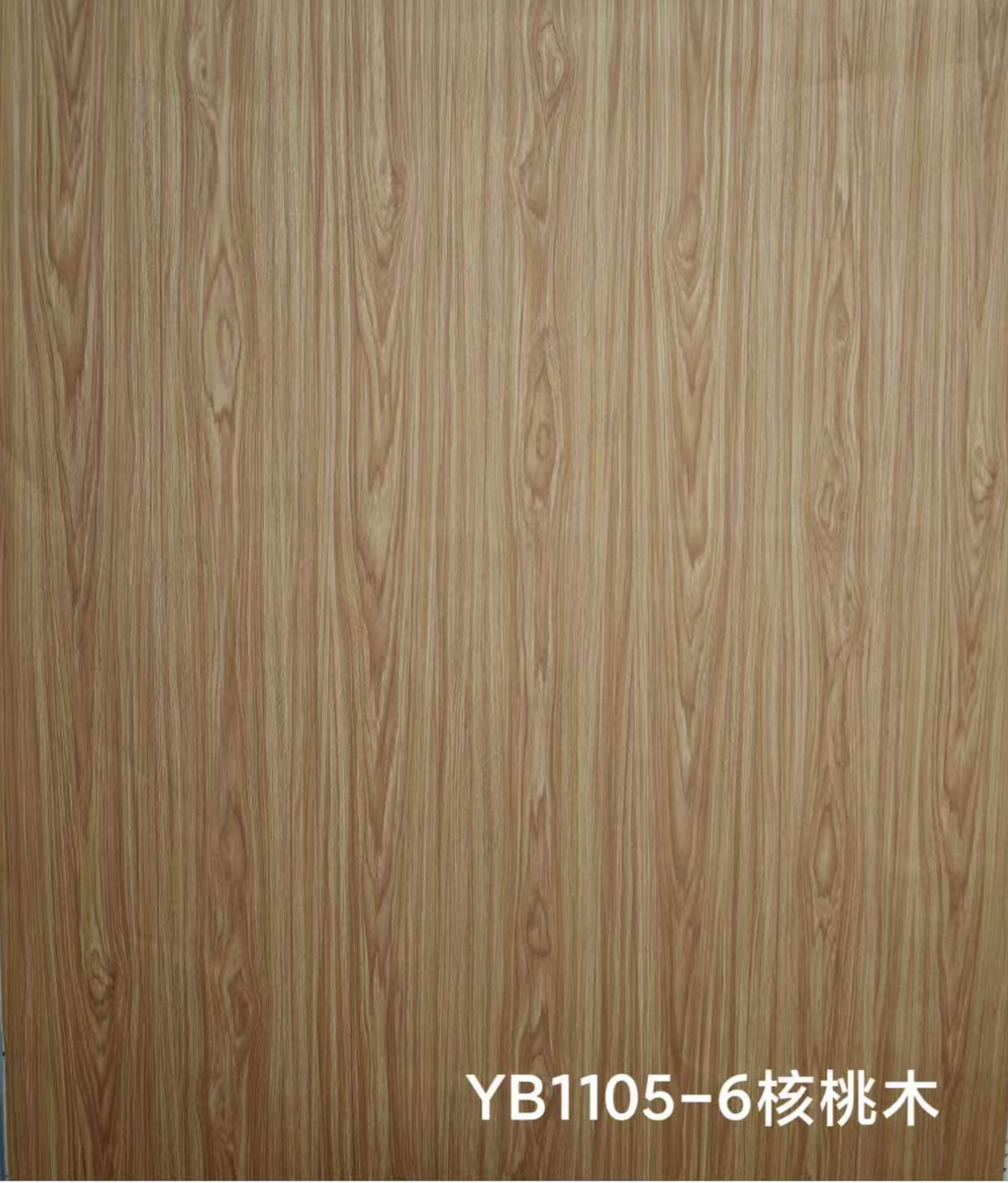 Melamine Paper YB1105-6 walnutYour email address will not be published. Required fields are marked.View Product →
 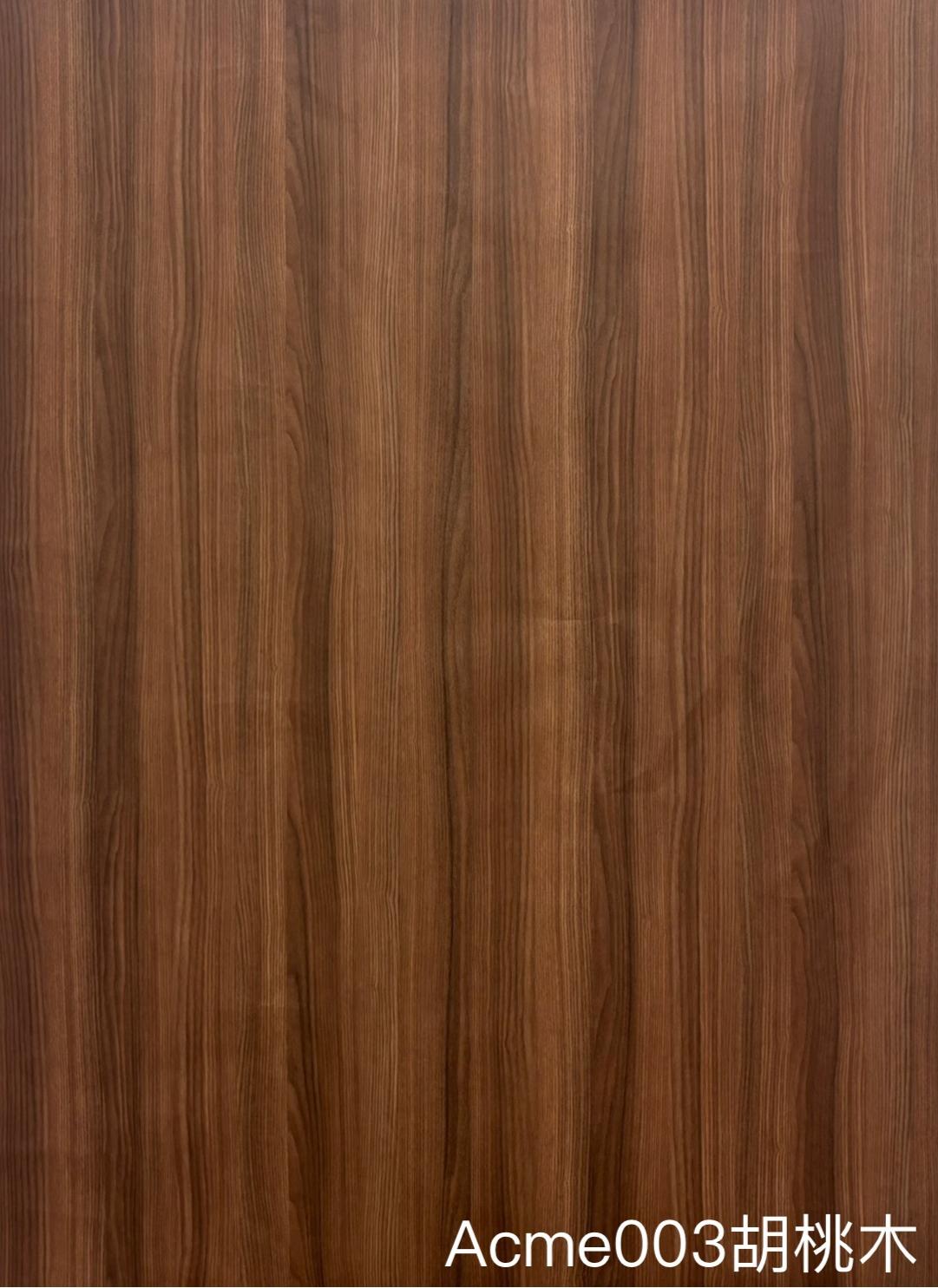 Melamine Paper Acme004-22 elmYour email address will not be published. Required fields are marked.View Product →
A Simple Quality Checklist Before You Order
Most complaints about decorative paper trace back to something that could have been checked in ten minutes. Run through this list with any supplier before committing to a container load.
- Confirm the roll width, core diameter and roll length match your wrapping or laminating equipment.
- Ask for the base paper weight and resin content, and check they suit the profile you are wrapping.
- Request a lightfastness statement if the finished door will sit near a window or under strong lighting.
- Run a trial on your own production line, not just a hand sample, before approving the batch.
- Agree how colour consistency will be maintained across repeat orders and what happens if a shade drifts.
- Check the packaging: moisture barrier film, edge protection and pallet stability all affect arrival condition.
Working With a Manufacturer Who Knows Your Line
Decorative paper is a component, not a finished product, so the supplier's understanding of your process matters as much as the paper itself. Our own production base in Hangzhou covers more than 20,000 square metres, with ten coating lines supporting an annual output of 150,000 melamine doors alongside our WPC door capacity. If you want to see how that capacity is organised before you place an order, you are welcome to take a look at our factory.
In practice, that means domestic orders can move within 24 hours and export orders are typically prepared within a week, backed by an ERP system that keeps specifications and shade references attached to each order. Our technical team also reviews component drawings with buyers, so the paper width, resin grade and decor are agreed before production starts rather than adjusted afterwards.
Narrow sized melamine paper is a small part of a door, but it is the part customers see first. Getting the width, the resin balance and the decor right the first time saves far more than it costs, and it keeps every frame, skin and trim consistent across a project. If you are comparing formats or preparing a specification for an upcoming run, our team is happy to talk through the details with you.


