


 English
 中文简体
 عربى

Walk through any door factory and you will see the same quiet challenge on every line: covering a large, flat surface with a decor that reads like real timber, survives years of daily handling, and still leaves a sensible margin at the end of the month. Wide sized melamine paper sits right at the centre of that challenge. It is the version of melamine decor built for bigger faces — full door skins, oversized furniture panels, long wall elements — and it behaves noticeably differently from the narrower rolls many workshops keep on the shelf.
We make decorative materials as well as doors, so a fair part of our working day goes into practical questions about paper: which width, which decor, which press settings, which batch. This article pulls those answers together. Nothing here needs a degree in polymer chemistry, just the details that actually change the result when you buy paper by the pallet and press it every shift.
Content
- 1 What "Wide Sized" Really Means in Melamine Paper
- 2 Why Wide Formats Earn Their Place on the Line
- 3 What Goes Into a Good Wide Sized Melamine Paper
- 4 Reading the Decor Range: Codes, Woodgrains and Stones
- 5 Pressing and Processing Notes That Save Rework
- 6 A Practical Buying Checklist
- 7 How Wide Paper Fits a Complete Door Programme
What "Wide Sized" Really Means in Melamine Paper
Melamine decorative paper is generally grouped into two families: narrow sized and wide sized. The names describe the width of the paper and, in practice, the kind of surface it is expected to cover. Narrow sized paper is the everyday workhorse for slimmer panels, profiles, edge strips and smaller components. Wide sized paper is produced for larger surfaces, where a single run of decor has to cover a whole door skin or a full furniture panel without an obvious joint.
That sounds like a simple size question, but it changes quite a lot downstream: how you cut, how you load the press, how much waste you carry, and how even the finished face looks under raking light.
| Aspect | Narrow Sized Paper | Wide Sized Paper |
|---|---|---|
| Typical surface | Narrow panels, profiles, edge strips | Full door skins, large furniture panels |
| Seam handling | More joints on a large face | Fewer joints, cleaner visual flow |
| Press match | Smaller platens, short cycles | Wide platens, high-volume runs |
| Stock planning | Flexible for mixed small batches | Efficient for long runs of one decor |
| Decor range | Deep woodgrain and stone library | Same decor language, sized for bigger faces |
One point is worth saying early: wide and narrow are not quality tiers. A well-made narrow paper and a well-made wide paper share the same base paper discipline, resin control and print accuracy. The difference is fitness for purpose. If your product is a long door skin, a narrow roll simply gives you more seams to hide. If your product is a slim profile, a wide roll simply gives you more offcut. For a longer look at the wider format, our team has put together a comprehensive guide to wide sized melamine paper in modern manufacturing that digs into the production side.
Why Wide Formats Earn Their Place on the Line
In door production the arithmetic is easy to follow. Covering a full face from one piece means fewer joints, fewer alignment errors and less time spent matching adjacent strips so the grain runs in a single direction. On a carved or routed door this continuity matters even more, because the decor has to follow the profile rather than break across it.
There is a throughput story as well. Wide paper is designed to run on wider platens and higher-volume lines, so a factory pressing door skins in long runs can plan one decor, one setting and one stack height instead of juggling several narrow strips per cycle. Colour consistency across the run also becomes easier, since every skin comes off the same roll rather than a mix of rolls.
 Wide Sized Melamine Paper for High-Volume Door SkinsExplore wholesale wide-sized melamine paper options for high-volume door-skin production and consistent decor across long runs.View Product →
Wide paper is comfortable on composite cores too. Whether you are overlaying HDF, MDF or a WPC door panel, the resin system in a well-made wide paper is formulated to bond cleanly under heat and pressure and to cope with the small movements a door experiences in a bathroom or a busy corridor.
What Goes Into a Good Wide Sized Melamine Paper
Four things decide whether a wide paper performs on your line or fights you.
Base paper and resin pick-up
The base paper has to carry resin evenly across its full width, because any variation shows up as a patchy gloss or a weak bond on one side of the press. Ask suppliers how they monitor resin pick-up across the roll, not just at the centre.
Surface finish and texture
Wide papers come in matte, satin, soft-touch and embossed woodgrain finishes. Texture does two jobs: it makes a printed decor feel like timber under the hand, and it softens the small marks that accumulate on a door during installation. For doors, a moderate texture usually reads more convincingly than a glass-flat surface.
Colour consistency and batch control
A decor that drifts between batches is a warranty claim waiting to happen, especially when a customer orders a matching run months later. Reputable producers keep reference samples and retained batch panels. When you approve a decor, keep your own approved sample and ask for it to be referenced on future orders.
Reading the Decor Range: Codes, Woodgrains and Stones
Flipping through a decor book can feel overwhelming, so start with structure. Wide sized ranges are usually organised by numeric series — 78011, 78042, 78081, 7812, 7838, 7851 and so on — with each series covering one visual family, whether that is a straight-grained oak, a warm walnut or a stone effect. Learn the handful of series that sell in your market and you will spend far less time hunting through pages.
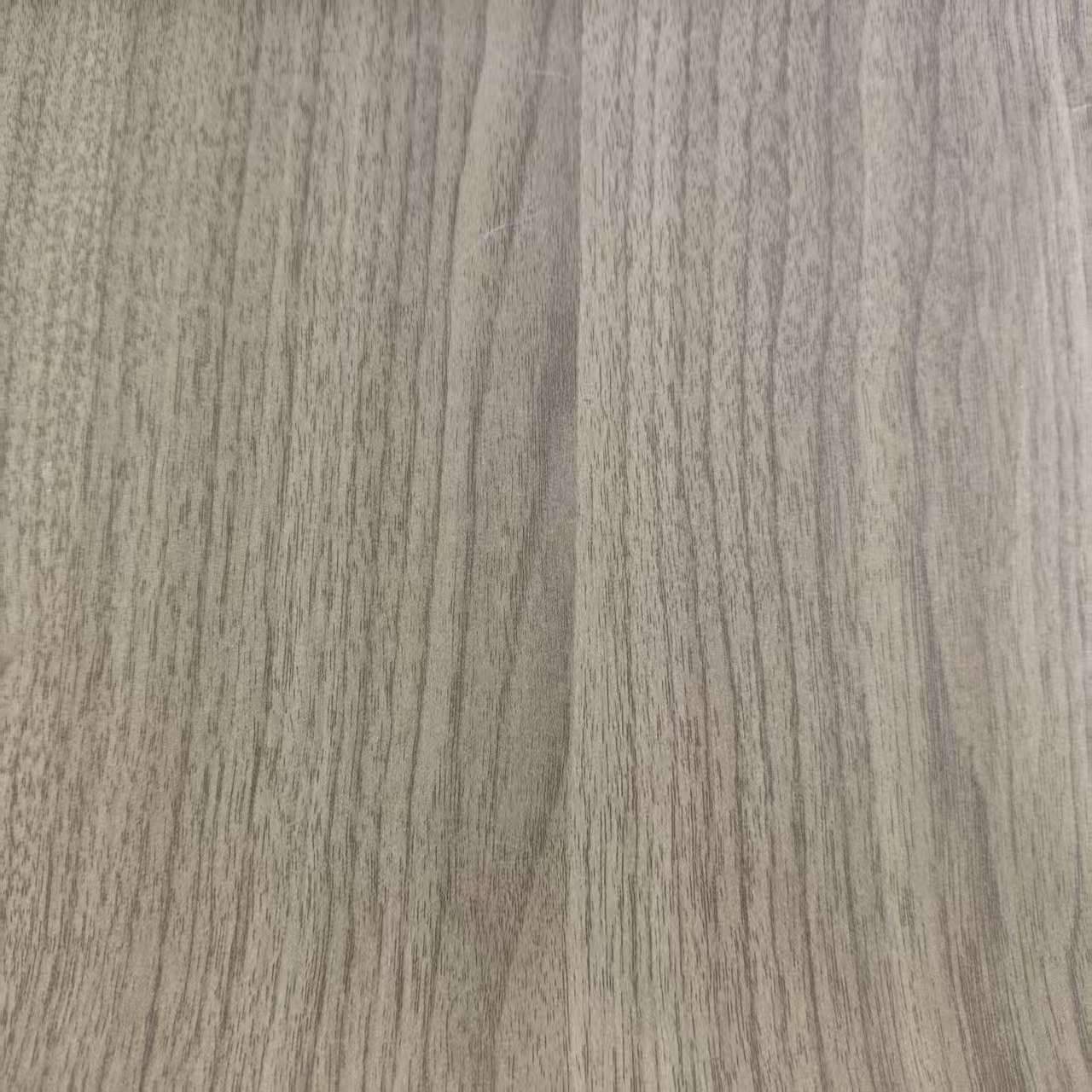 Melamine Paper 8043-1 Wide Sized Decorative PaperSee Melamine Paper 8043-1 among wide-sized decorative papers, with adjacent models and inquiry details for wholesale decor selection.View Product →
Woodgrains still dominate, and for good reason. Oak, walnut, teak, elm, maple and beech travel well across residential and workplace interiors, and they age gracefully alongside solid timber furniture. Stone and concrete effects are the useful counterpart when a project wants a flatter, more architectural mood. Because the print sits under the resin layer, the decor keeps its appearance through cleaning and everyday wear.
Pressing and Processing Notes That Save Rework
Wide paper is forgiving, but it is not indifferent to how it is used. A few habits keep results repeatable:
- Inspect the roll before it goes on the line, checking for edge damage, moisture marks and colour drift against your approved sample.
- Acclimatise paper and substrate in the same area, so both are working at similar temperature and humidity before they meet.
- Record press parameters per decor rather than per operator, and change one variable at a time when you adjust.
- Trim edges cleanly and keep labelled offcuts as samples; a labelled offcut is cheaper than a customer complaint.
- Stack and cool pressed boards flat, under even weight, before machining.
Moisture is the usual culprit when a wide face blisters, warps or shows a dull patch. If a batch starts behaving oddly, check storage conditions and core moisture before you blame the paper.
A Practical Buying Checklist
Before you place an order for wide sized melamine paper, run through these points:
- Confirm the face width you actually need, including trim allowance at both edges.
- Ask for a sample of the exact series and finish, not the nearest available alternative.
- Request the batch or lot reference for the material you are being quoted.
- Check consistency claims against retained samples, not only the data sheet.
- Confirm lead time and packing for your format, especially for export orders.
- Agree in writing how future orders will be matched to the same decor reference.
None of this is complicated, but doing it once at the start saves a difficult conversation in the middle of a production run.
How Wide Paper Fits a Complete Door Programme
We tend to look at melamine paper as one layer in a larger job. A finished WPC door is a stack of decisions: the frame, the core panel, the architrave, the surface film or paper, and the hardware that ties everything together. When the decor on the skin, the architrave and any matching panels come from one coordinated range, the door looks deliberate rather than assembled from whatever was in stock.
 Melamine Paper 7849-1 for Coordinated WPC Door SurfacesView wide-sized Melamine Paper 7849-1 as part of coordinated door decor, with options to source matching frames, panels and architraves.View Product →
Because we run our own extrusion and coating lines and buy raw materials in volume, wide sized paper can be supplied as a standalone material or alongside the structural parts that go with it — frames, panels, architraves, films and hardware. If it helps to see where the material is actually processed, you are welcome to look at our manufacturing facility and the equipment behind it.
Choosing wide sized melamine paper is mostly a matter of matching the paper to the surface you have to cover, then buying it consistently. Get the width, the finish and the batch discipline right, and the rest of the door programme becomes much calmer. If you would like samples of a particular series, help comparing a wide and a narrow option for your product, or a straight answer about lead times, our team is glad to talk it through.


