


 English
 中文简体
中文简体
 عربى
عربى

Content
- 1 What Are WPC Doors for Bathroom and Why They're Different
- 2 How WPC Bathroom Doors Are Made and What's Inside Them
- 3 Key Advantages of WPC Bathroom Doors Over Other Door Types
- 4 WPC Bathroom Doors Compared to Other Common Bathroom Door Materials
- 5 Types and Styles of WPC Doors Available for Bathrooms
- 6 What to Check When Buying WPC Doors for Your Bathroom
- 7 Installation Tips for WPC Bathroom Doors
- 8 Maintaining WPC Bathroom Doors for Long-Term Performance
What Are WPC Doors for Bathroom and Why They're Different
WPC doors for bathroom are interior doors manufactured from Wood Plastic Composite — a hybrid material that combines wood fiber or wood flour with thermoplastic polymers such as PVC, polyethylene, or polypropylene, along with various additives that control processing behavior, color stability, and performance characteristics. The resulting material shares a visual similarity with wood — it can be molded, textured, and finished to resemble natural timber — while delivering the moisture resistance, dimensional stability, and low maintenance performance of a plastic-based product. These properties make WPC bathroom doors a fundamentally more suitable choice for wet room environments than traditional solid wood or engineered wood doors, which are vulnerable to moisture absorption, swelling, and fungal degradation when used in bathrooms.
Unlike standard interior doors made from MDF, HDF, or solid timber — which rely on surface coatings to protect the underlying wood-based core from moisture — WPC bathroom doors are moisture-resistant throughout their entire cross-section. Even if the surface coating is scratched, chipped, or damaged at the cut edges during installation, the core material does not absorb water or swell the way wood-based materials do. This through-body moisture resistance is the defining practical advantage of WPC doors over conventional interior door materials in bathroom applications, and it is why WPC flush doors and WPC panel doors have become increasingly popular in residential and commercial bathroom fit-outs across humid climates and in applications where door longevity and low maintenance are priorities.
How WPC Bathroom Doors Are Made and What's Inside Them
Understanding the construction of a WPC bathroom door helps explain both its performance advantages and its practical characteristics in use. WPC door manufacturing involves several distinct processes depending on the door profile and finish style.
Core Material Composition
The core of a WPC door is produced by blending wood fiber or rice husk flour — typically comprising 30 to 70 percent of the formulation by weight — with a thermoplastic matrix, most commonly PVC in door applications because of PVC's processing characteristics and its compatibility with standard wood-look surface finishes. The blend also includes chemical additives: foaming agents that create a cellular structure within the core to reduce weight and improve thermal insulation, stabilizers that protect the PVC from heat degradation during processing, lubricants that control flow behavior in the extruder, and coupling agents that improve adhesion between the wood fiber and plastic matrix. The resulting compound is extruded through a die shaped to the door's cross-section profile, cooled in a calibration system, and cut to length. The extruded WPC profile forms either the complete door slab in the case of fully extruded designs, or the internal structural frame and fill sections in frame-and-fill construction types.
Surface Finishes Applied to WPC Doors
The surface of a WPC door for bathroom use can be finished in several ways depending on the product tier and application. The most common surface treatment is PVC film lamination, in which a decorative PVC or PP foil printed with wood grain, solid color, or other patterns is heat-bonded to the WPC substrate surface. This provides a smooth, wipe-clean exterior surface with a realistic wood appearance. Higher-end WPC bathroom doors may use vacuum-formed membrane pressing to apply a film that wraps around routed profiles and panel details, creating a seamless surface without exposed edges. Some WPC door systems use an acrylic or UV-cured paint system applied directly to the WPC surface for a smooth, high-gloss or matte painted finish. All of these surface treatments contribute to the door's overall moisture resistance, but the quality of the edge sealing — particularly at hinge cutouts, lock bores, and the bottom edge — is equally important in ensuring water does not find a path into the door structure through cut surfaces.
Door Frame and Frame Material
Most WPC door systems for bathrooms are sold as complete sets that include both the door slab and the door frame, with the frame also manufactured from WPC or PVC-based composite material to match the door's moisture resistance throughout the entire installation. This is an important consideration — installing a moisture-resistant WPC door slab into a standard timber door frame defeats much of the purpose of choosing WPC, as the timber frame will still be subject to moisture swelling and deterioration at the door opening. Full WPC door and frame sets ensure consistent material performance across the entire door assembly, and many manufacturers supply pre-machined sets with hinges, door stops, and architrave profiles included for straightforward site installation.
Key Advantages of WPC Bathroom Doors Over Other Door Types
The reasons for choosing a WPC door for a bathroom application go beyond simple moisture resistance. WPC composite bathroom doors offer a combination of practical benefits that make them a superior choice compared to most alternatives across a range of performance dimensions that matter specifically in bathroom environments.
- Waterproof and moisture-proof throughout: WPC material does not absorb water in the way that wood-based materials do. The plastic matrix surrounding the wood fibers in the composite prevents liquid water uptake, and the cellular foam structure of the core means there is no continuous wood grain path through which moisture can wick. This prevents the swelling, warping, and frame binding that commonly affect timber bathroom doors in humid environments over time.
- Termite and borer resistant: Wood-boring insects cannot establish themselves in WPC material because the wood fiber content is fully encapsulated within the plastic matrix and is not accessible to insects as a food source. This is a significant advantage in tropical and subtropical climates where termite activity is a common cause of premature interior door failure.
- Anti-fungal and mold resistant: The combination of low moisture absorption and the plastic matrix creates an environment that does not support the fungal growth that causes black mold staining and surface degradation on timber and MDF doors in poorly ventilated bathrooms. This contributes to both the longevity of the door and the hygiene of the bathroom environment.
- Dimensional stability: WPC doors maintain their dimensions and flatness across the range of temperature and humidity changes encountered in bathroom use — they do not expand in summer humidity, contract in winter dryness, or warp when exposed to steam from hot showers. This stability ensures the door continues to hang correctly and close properly throughout its service life without requiring periodic adjustment of hinges or strike plates.
- Low maintenance requirements: WPC bathroom doors require no periodic painting, sealing, or treating to maintain their moisture resistance — the material's protective properties are inherent rather than dependent on a surface coating that must be maintained. Regular wiping with a damp cloth is sufficient for routine cleaning, and the surface finishes used on WPC doors are resistant to the cleaning products typically used in bathroom environments.
- Sound and thermal insulation: The cellular foam core structure of WPC doors provides meaningful acoustic and thermal insulation compared to hollow-core timber doors, contributing to bathroom privacy and reducing heat loss from heated bathroom spaces. While WPC doors are not acoustic specialist products, their solid foam-filled cross-section performs noticeably better than lightweight hollow doors in reducing sound transmission.
WPC Bathroom Doors Compared to Other Common Bathroom Door Materials
Choosing the right bathroom door material involves understanding how different options perform across the specific demands of a wet room environment. The comparison below covers the most commonly considered materials for bathroom doors and evaluates them across the performance dimensions that matter most in practice.
| Material | Moisture Resistance | Durability | Maintenance | Termite Resistance | Cost | Appearance |
| WPC Door | Excellent | Very Good | Very Low | Excellent | Medium | Wood-like, versatile |
| Solid Timber | Poor–Fair | Good (if maintained) | High | Poor | High | Premium, natural |
| MDF / HDF Door | Poor | Fair | Medium | Poor | Low–Medium | Smooth, paintable |
| PVC Door | Excellent | Good | Very Low | Excellent | Low–Medium | Plastic-looking |
| Aluminium Frame Door | Excellent | Excellent | Low | Excellent | High | Modern, industrial |
| Fiberglass Door | Excellent | Excellent | Low | Excellent | Very High | Wood-like or smooth |
WPC bathroom doors occupy a strong position in this comparison — delivering the moisture resistance and low maintenance of fully synthetic materials like PVC and aluminum, while offering a much more convincing wood-like aesthetic than standard PVC doors at a price point significantly below fiberglass or premium aluminum options. For most residential bathroom applications, this combination of attributes represents the best overall value proposition in the market.
Types and Styles of WPC Doors Available for Bathrooms
WPC bathroom door panels are available in a range of styles and configurations that cater to different interior design preferences and bathroom layout requirements. Understanding the available options helps homeowners and designers select products that meet both the aesthetic and functional requirements of their project.
WPC Flush Doors
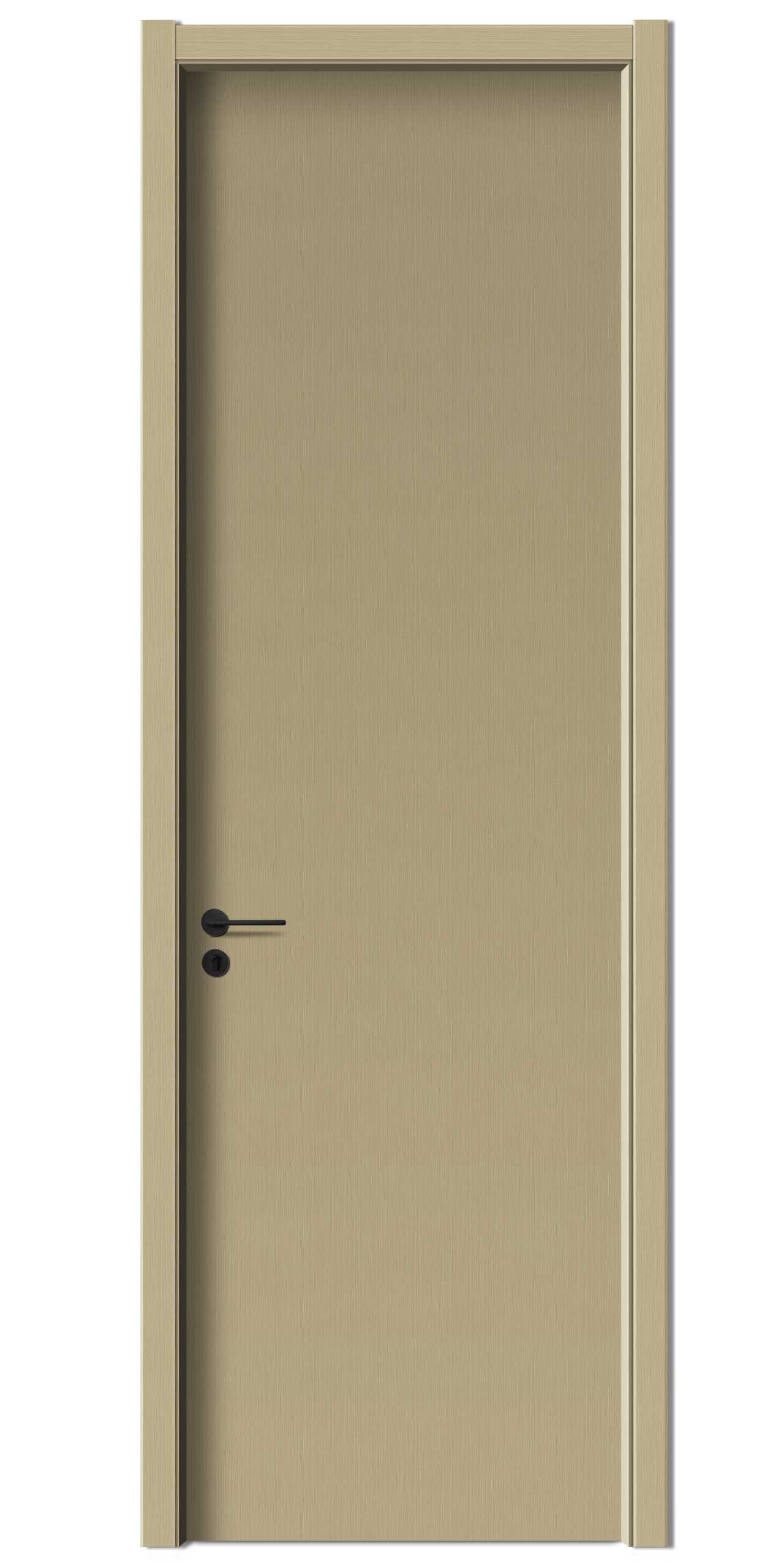
WPC flush doors feature a completely flat, smooth surface on both faces with no raised panels, grooves, or decorative moldings. They are the most widely used style for modern and contemporary bathroom interiors because their clean, uninterrupted surface aligns well with minimalist design aesthetics and is the easiest surface profile to keep clean in a bathroom environment. WPC flush bathroom doors are available in a wide range of surface finishes — from plain white and neutral solid colors to realistic wood grain textures in teak, oak, walnut, and other popular species — providing design flexibility within a practical, low-maintenance format.
WPC Panel Doors
WPC panel doors incorporate raised or recessed decorative panel details on the door face, giving them a more traditional or classic appearance compared to flush designs. These panels are typically formed during the extrusion and molding process as an integral part of the door structure, rather than being applied as separate components. Single-panel, double-panel, and four-panel configurations are common, and the panel geometry can range from simple rectangular profiles to more ornate raised-frame designs. WPC panel doors are a good choice for bathrooms in homes with traditional or transitional interior design schemes where the door needs to harmonize with paneled cabinetry or period-style architectural details.
WPC Doors With Glass Inserts
Some WPC bathroom door designs incorporate frosted, textured, or patterned glass inserts that allow light transmission between the bathroom and the adjacent space without compromising privacy. This can be particularly useful in bathrooms that lack natural light, where borrowing light from an adjacent corridor or bedroom improves the feel of the space during daytime use. The glass inserts in WPC bathroom doors are typically set into a WPC rebated frame section rather than a timber beading, maintaining the overall moisture resistance of the door assembly.
Sliding and Bifold WPC Bathroom Doors
WPC material is also used in sliding door and bifold door configurations for bathrooms where space constraints make a conventional hinged door impractical. Sliding WPC bathroom doors run on overhead or floor-mounted track systems and can be configured as barn-style surface-mounted sliders or as concealed pocket doors that slide into a wall cavity. Bifold WPC bathroom doors fold against the wall when opened, requiring significantly less clearance than a standard hinged door. Both configurations benefit from the dimensional stability of WPC material, which ensures the door panels continue to operate smoothly in the track without the sticking and binding that can affect timber sliding doors in humid environments.
What to Check When Buying WPC Doors for Your Bathroom
The WPC door market includes a wide range of products at different quality and price levels, and not all products that are labeled as WPC offer the same level of moisture resistance, durability, and safety. Knowing what to look for when evaluating products helps ensure you select a door that will genuinely perform in a bathroom environment over the long term.
- Check the actual WPC composition: The ratio of wood fiber to plastic in the composite core affects both moisture resistance and mechanical strength. Higher plastic content generally improves moisture resistance, while higher wood fiber content may offer better screw-holding and machinability. Ask suppliers for the core material specification and density — a denser, higher-quality WPC core will have better mechanical properties and more consistent behavior.
- Verify water absorption test results: Quality WPC bathroom doors should be accompanied by water absorption test data — typically expressed as the percentage weight gain after 24-hour immersion in water. A figure below 1–2% indicates good moisture resistance. Be cautious of products where this data is unavailable or where the supplier relies on general claims without supporting test documentation.
- Inspect edge and corner treatment: The cut edges of the door — at the hinge rebates, lock bore, and particularly the bottom edge — are the most vulnerable points for moisture ingress. Quality WPC bathroom doors should have sealed or treated edges, and the door frame system should cover and protect the bottom edge of the door from standing water on the bathroom floor.
- Check for formaldehyde and VOC certification: WPC materials use wood fiber components that may contain residual formaldehyde from the wood processing, and the plastic additives in the composite may include volatile organic compounds. For a door installed in the enclosed environment of a bathroom, ask for test certificates confirming compliance with formaldehyde emission standards such as E1 (Europe) or CARB Phase 2 (California) and check for general VOC safety certifications relevant to your market.
- Assess the surface finish quality: Run your hand across the door surface and inspect it under direct light for uniformity of texture and color, absence of bubbles or delamination in the film surface, and quality of the joint between the surface film and the door edges. A poorly applied surface film that is starting to lift at edges in a showroom will fail much more quickly once installed in a steam-filled bathroom environment.
- Confirm the frame material: As noted earlier, the door frame must be made from WPC or equivalent moisture-resistant material, not timber, to ensure the whole door assembly performs consistently in a bathroom environment. Confirm this with the supplier before purchasing, as some budget door sets save cost by pairing a WPC door slab with a standard timber frame.
Installation Tips for WPC Bathroom Doors
Even the best WPC door for bathroom use will not perform to its potential if it is installed incorrectly. The following installation considerations are specific to WPC material and to bathroom environments and should be observed alongside standard door installation practices.
- Seal all cut edges immediately after cutting: If the door needs to be trimmed to height or width on site, all freshly cut edges should be sealed with a compatible PVC edge band, silicone sealant, or the manufacturer's recommended edge sealer before installation. Leaving unsealed cut edges in a bathroom risks moisture penetration into the core, even with moisture-resistant WPC material.
- Maintain a clearance gap at the bottom: Leave a minimum 10 mm clearance between the bottom of the door and the finished floor level. This gap ensures the door does not drag on the floor as the building settles, and it prevents the bottom edge from sitting in standing water after showering. If privacy is a concern, fit a brush seal or flexible bottom seal rather than reducing the gap.
- Use stainless steel or zinc alloy hardware: Standard steel hinges, screws, and strike plates will corrode in a bathroom environment. Use only stainless steel (grade 304 or higher) or quality zinc alloy hardware at all fixing points to avoid rust staining on the door surface and hardware failure over time.
- Allow the door to acclimatize before installation: Store the WPC door in the installation building for 24 to 48 hours before fitting to allow the material to reach the ambient temperature and humidity of the building. Although WPC is significantly more dimensionally stable than timber, allowing acclimatization before installation ensures the best fit and minimizes any minor dimensional changes after the door is hung.
- Apply silicone sealant at frame-to-wall joints: The junction between the door frame and the bathroom wall should be sealed with a mold-resistant silicone sealant to prevent moisture from penetrating behind the frame and into the wall structure. This is standard practice for any bathroom door installation but is particularly important where the bathroom floor is tiled and water may track along the floor to the door opening.
Maintaining WPC Bathroom Doors for Long-Term Performance
One of the most appreciated practical benefits of WPC doors for bathrooms is how little ongoing maintenance they require compared to timber alternatives. However, a basic routine of appropriate care extends the life and appearance of the door and avoids the few issues that can affect WPC surfaces over time.
- Regular surface cleaning: Wipe the door surface with a soft, damp cloth to remove soap splashes, water marks, and general bathroom grime. For more persistent marks, a mild household cleaner diluted in water is effective on most WPC surface finishes. Avoid abrasive cleaners, scouring pads, and solvent-based products that can scratch or chemically damage the surface film.
- Check and refresh silicone seals periodically: Inspect the silicone sealant at the frame-to-wall junction annually and re-apply where the sealant has shrunk, cracked, or discolored. Maintaining an intact silicone seal prevents moisture from tracking behind the frame and causing problems in the adjacent wall structure, even though the door itself is moisture resistant.
- Check hinge and lock fixings: WPC material holds screws well but may be more susceptible to screw pull-out under repeated dynamic loading than dense hardwood. Periodically check that hinge screws are tight and that the lock case and strike plate fixings remain secure. If screw holes become enlarged, fill with WPC-compatible filler or epoxy before re-fixing rather than simply using longer screws.
- Avoid prolonged direct sunlight exposure: Most WPC door surface films are UV-stabilized for indoor use but are not intended for prolonged direct sunlight exposure. If the bathroom has a window directly opposite the door, consider a UV-filtering window film to protect the door surface finish from gradual color fading over time.


