


 English
 中文简体
 عربى

Door architrave is one of those details that rarely gets discussed until something looks unfinished. It is the trim around a door frame that covers the joint between frame and wall, protects the edge, and gives the opening a clean visual finish. In a busy home or commercial interior, that small profile takes more abuse than people expect. A WPC door architrave is designed to handle that daily contact while keeping the look neat.
We have worked with enough door projects to know that architrave is not just a decorative afterthought. It affects how the door sits in the room, how easily the edges can be cleaned, and how well the whole opening holds up over time. The right profile can make a standard door look considered. The wrong one can make even a good door feel incomplete.
Content
- 1 What a WPC Door Architrave Actually Does
- 2 Why WPC Makes Sense for Door Trim
- 3 Profiles and Finishes: Flat, Arc, and the Details That Matter
- 4 Matching Architrave to Door, Frame, and Room Style
- 5 Installation Notes from the Factory Floor
- 6 Choosing a Supplier Without the Guesswork
- 7 Common Questions We Hear from Buyers
- 8 Final Take
What a WPC Door Architrave Actually Does
Architrave is the visible border around the door frame. It bridges the gap between the frame and the plastered wall, hides minor irregularities, and gives the opening a finished edge. Because it sits proud of the wall, it also takes knocks from bags, furniture, trolleys, and everyday traffic. That is why the material matters. A soft or unstable trim will show dents, movement, or paint cracks sooner than expected.
WPC stands for wood plastic composite. It combines wood-based material with polymer and additives to create a profile that behaves more consistently than natural timber in changing humidity. A WPC door architrave is not a structural part of the door frame. It is a finishing component, but a good one supports the overall quality of the installation by staying straight, holding its surface, and resisting the moisture that architrave often meets near bathrooms, kitchens, and utility areas.
Why WPC Makes Sense for Door Trim
Timber architrave can look excellent, but it needs the right conditions. If the building is damp, newly plastered, or subject to seasonal humidity, wood can move, cup, or show joints after painting. WPC is chosen because it offers better dimensional stability in interior conditions. It does not absorb water in the same way as untreated wood, so it is less likely to swell at the base or along an edge. That is a practical advantage in busy buildings where cleaning and moisture are part of normal use.
The surface is another reason. Quality WPC profiles are supplied with a durable finish that is easy to wipe and does not need the same level of repainting as bare timber. This does not mean every WPC architrave is equal. The formulation, the profile density, and the coating all affect how the trim performs. It is worth asking how the surface is finished and how the product behaves when cut and fixed. Our WPC door architrave explained guide covers the basics if you are comparing options for a first project.
There is also a design benefit. WPC can be produced with consistent colour and profile, so a project does not have to rely on matching timber batches. For contractors and door manufacturers, that consistency reduces waste and makes it easier to keep a large installation visually uniform.
Profiles and Finishes: Flat, Arc, and the Details That Matter
Flat architrave has a clean, rectilinear face. It suits modern interiors, flush doors, and projects where the trim should recede rather than compete with the door. The lines are simple, the joints are easy to read, and the result is usually neat and understated. If a room has minimal detailing, flat profile is often the safer choice because it will not fight with the door design.
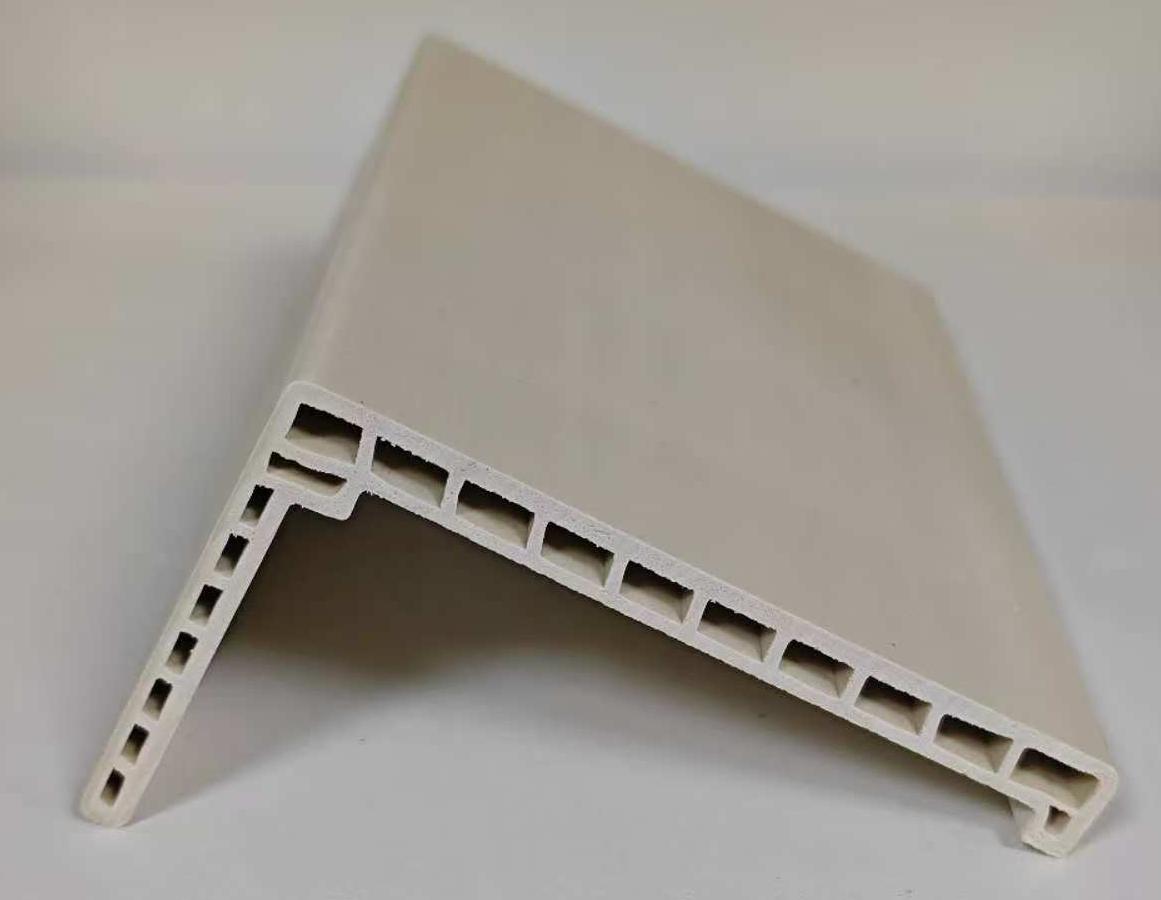 Custom Off-White Flat WPC Door ArchitraveFlat, off-white WPC trim for clean modern door frames, with standard and custom sizes for new builds or renovations.View Product →
Arc architrave has a gentle curve or rounded edge that softens the opening. It works well in classic, transitional, and family-oriented interiors, especially when the door has panels or carved details. The curve can echo the shape of the door and add a little warmth without becoming ornate. It is less about decoration for its own sake and more about making the frame feel finished rather than sharp.
 Custom Off-White Arc WPC Door ArchitraveCurved off-white WPC trim that softens door openings, available in standard or custom sizes for modern and traditional interiors.View Product →
| Profile | Visual effect | Good fit | Installation note |
|---|---|---|---|
| Flat | Clean, minimal lines | Modern and minimalist interiors; flush doors | Keep mitres tight and edges aligned |
| Arc | Softer, traditional curve | Classic and transitional rooms; panelled doors | Check profile depth and frame clearance before ordering |
Colour is just as important as shape. Off-white and neutral finishes are popular because they work with many wall colours and door surfaces. The key is to compare undertones, not just the name of the colour. A warm white architrave against a cool white wall can look like a mismatch even when both are technically white. If the door frames are already finished, ask for a sample of the architrave surface so the whole opening can be viewed together in the actual light.
Matching Architrave to Door, Frame, and Room Style
Start with the door frame, because the architrave should look like it belongs to the same system. The profile should cover the frame-to-wall joint without overhanging awkwardly or leaving a thin, fragile edge. On a standard interior door, this is usually straightforward, but wider frames or deeper plaster reveals need to be checked before cutting begins. The goal is a trim that sits flush, covers fully, and looks intentional from both the front and the side.
- Match the architrave finish to the door or frame finish when a unified look is wanted.
- Choose flat profiles for clean, modern doors and arc profiles for softer or traditional designs.
- Check the thickness and width of the profile against the frame depth, not just the visible face.
- Order a sample when colour matching across different production batches.
- Keep spare lengths for repairs, especially on high-traffic sites.
It also helps to think about the room as a whole. A slim flat architrave can make a small room feel less cluttered. A slightly deeper arc profile can add presence in a larger space with panelled doors. The difference is subtle, but these small decisions are what make an interior feel resolved rather than simply installed.
Installation Notes from the Factory Floor
Good architrave can still look poor if it is fitted in a hurry. The profile needs to be straight, the frame needs to be set correctly, and the joints need to be tight. We recommend bringing the material into the room for a short acclimatisation period before cutting, especially when the building is newly heated or still drying out. Check the frame with a level and a straight edge first. Architrave cannot reliably hide a frame that is badly out of line.
- Measure each side of the opening separately; walls and frames are rarely perfectly equal.
- Cut mitres carefully and test-fit the pieces before fixing.
- Fix the architrave securely to the frame or wall as the system requires, without over-tightening and distorting the profile.
- Fill fixing points neatly and keep the surface clean during handling.
- Seal the wall joint with a suitable flexible filler or sealant, then clean the architrave face.
Pay attention to the base of the architrave. This is where cleaning water and minor dampness tend to collect. A clean seal and a profile that stands slightly clear of wet mopping will help the trim stay looking good. On sites with heavy traffic, protect newly fitted architrave until handover, because the face can be marked by tools, ladders, and plasterboard sheets long before the building is occupied.
Choosing a Supplier Without the Guesswork
When you are buying WPC door architrave in volume, the questions are practical. Is the profile straight? Is the colour consistent from bundle to bundle? Does the surface resist scuffs and cleaning? Are the ends cleanly finished? A good supplier should be able to answer these points without vague promises. For door manufacturers and contractors, consistency matters more than a single perfect sample, because the material has to perform across an entire order.
Our own production background is in WPC doors, frames, panels, and matching decorative surfaces, so we understand how architrave interacts with the rest of the door set. We look at profile fit, colour harmony, packing, and delivery together, because a trim that arrives late or mismatched can hold up a whole installation. If you are planning a project, you can contact our team with your profile, finish, and quantity requirements and we will help you narrow down the right option.
Common Questions We Hear from Buyers
Is WPC door architrave waterproof?
It is moisture resistant and suitable for normal interior use, including bathrooms and kitchens when properly installed and sealed. It should not be treated as a product for continuous immersion or unresolved damp. The wall and frame conditions still need to be correct.
Can it be painted or repaired?
Many WPC profiles are supplied prefinished and only need cleaning. If a project calls for painting, check the coating and preparation requirements with the supplier first. Local repair of minor marks is usually possible, but matching a factory finish by hand can be difficult.
Does it have to match the door frame exactly?
It does not have to be identical, but it should look related. Matching colour, undertone, and profile depth gives the cleanest result. A deliberate contrast can work in some interiors, but it needs to be consistent across the opening.
Can I use it outside?
Standard interior architrave is not intended for exposed exterior use. Some WPC products are formulated for more demanding conditions, but direct sun, rain, and freeze-thaw movement require a specific exterior-grade specification. For normal interior doors, the standard product is the practical choice.
Final Take
WPC door architrave is a small component with a large visual job. It frames the opening, protects the edge, and helps the door sit properly in the room. Choose the profile for the design, check the finish against the door and frame, and treat installation as part of the quality story rather than a last-minute task. When those details are right, the architrave does what good trim should do: it quietly makes the whole opening look complete.


