


 English
 中文简体
 عربى

Choosing a door panel looks simple on a sample board, but it becomes much more important after the door has been in service for a year. A panel that looks right yet swells at the edges, telegraphs the frame, or refuses to hold a clean finish will cost more time than the original price difference. This guide is written from the factory floor up: what a WPC door panel is, where it works well, which specifications matter, and how to avoid small mistakes that turn into big complaints.
Content
What Is a WPC Door Panel?
A WPC door panel is an engineered component made from wood plastic composite. The material combines wood flour or wood fiber with a thermoplastic resin, usually PVC, plus stabilizers, lubricants, and colorants. The mixture is extruded into a panel, profile, or door skin. In a finished door, the panel may serve as the core, the face skin, or the structural leaf, depending on the product design. It is not the same thing as a complete door: a complete door also includes the frame, architrave, hinges, lock, and seals.
In our production, panels are made in widths from 730 mm to 1100 mm for residential and workplace doors, and they can be supplied as raw panels or assembled into finished doors. The important point for buyers is that “WPC” describes a family of formulations. Resin content, wood flour ratio, density, and skin quality change performance far more than the label on the sample.
Why WPC Door Panels Perform Well in Real Projects
Most buyers come to WPC panels for a practical reason: they want the look and feel of a painted or veneered door with less worry about moisture. Good-quality WPC panels offer:
- Moisture tolerance: they do not absorb water like MDF or solid wood, so they resist swelling in bathrooms, kitchens, and humid climates when edges are properly sealed.
- Dimensional stability: controlled extrusion and cooling help the panel keep its shape.
- Termite resistance: the plastic component does not attract insects as wood does.
- Consistent surface: color and texture can be controlled from batch to batch.
- Low maintenance: routine cleaning usually needs only a damp cloth.
- Machinability: panels can be cut, drilled, routed, and assembled with standard door-making equipment.
These advantages depend on formulation and workmanship. A low-density panel with poorly sealed edges will not deliver the same result as a dense, well-fused panel. We check incoming raw materials and compare batches before extrusion, because a panel that looks fine in a dry showroom can behave differently after a week in a humid warehouse.
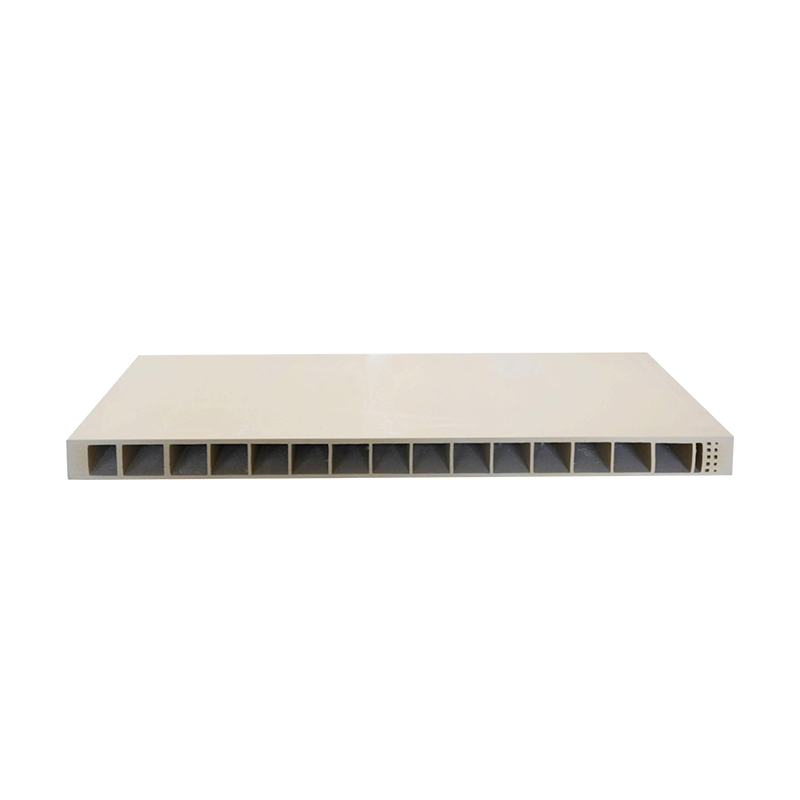 Custom WPC Door Panels for Interior and Exterior DoorsHigh-density WPC panels in multiple widths and core designs, with smooth easy-clean surfaces and sound insulation for residential, office, and commercial door projects.View Product →
Common Specifications and Panel Types
WPC door panels are usually specified by width, thickness, density, core design, and surface finish. Common widths include 730, 830, 930, 1030, and 1100 mm. Thickness varies by door system, and the panel may be hollow-core, solid-core, or a composite design with a WPC core and decorative skin. Surface options include plain, embossed wood grain, PVC film, and melamine paper. For interior doors, a flat panel is easier to clean and works well in modern minimalist designs; a carved or routed panel gives a more traditional or decorative look.
| Panel option | Typical strength | Watch point |
|---|---|---|
| WPC panel | Moisture tolerance and stable shape | Density and edge sealing |
| MDF panel | Smooth surface and easy painting | Swelling risk in wet areas |
| Solid wood panel | Natural feel and repair options | Movement with humidity |
| PVC panel | Water resistance and low cost | Stiffness and heat resistance |
How to Choose the Right WPC Door Panel
Start with the door, not the panel. A panel that is right for a lightweight interior door may be wrong for a heavy assembly door. A sensible selection process:
- Define the application: bedroom, bathroom, office, rental unit, or commercial project.
- Match the panel to the door structure: hollow-core, solid-core, or assembled frame.
- Check climate exposure: bathrooms and coastal sites need better edge sealing and moisture resistance.
- Choose the finish system: PVC film and melamine paper offer different wear and design profiles.
- Confirm hardware compatibility: hinge and lock positions must suit the panel density and core.
- Ask for samples from the production batch, not a special showroom sample.
- Review the supplier’s quality controls, packing, and lead time.
For a more detailed purchasing checklist, our WPC door panel buyer’s guide covers the questions we hear most often from door makers and project buyers.
Installation and Maintenance Notes
WPC panels are forgiving, but they are not maintenance-free. Store panels flat and dry, and let them acclimatize to the installation site before cutting. Keep cut edges sealed with the recommended edge band or sealant; this is especially important in bathrooms and kitchens. When fitting, check that the frame is plumb and square before hanging the door, because a twisted frame puts stress on the panel and hardware. Use fixings and hinges rated for the door weight, and avoid over-tightening screws near the panel edge.
For cleaning, use a soft damp cloth and mild detergent. Avoid abrasive pads, strong solvents, and standing water. If the door is exposed to high humidity, inspect the seals and edge protection once a year. A matching architrave should be installed with the same care: it protects the frame-to-wall joint and gives the door a clean finish. Our off-white flat WPC door architrave is one example of a profile designed to pair with these panels.
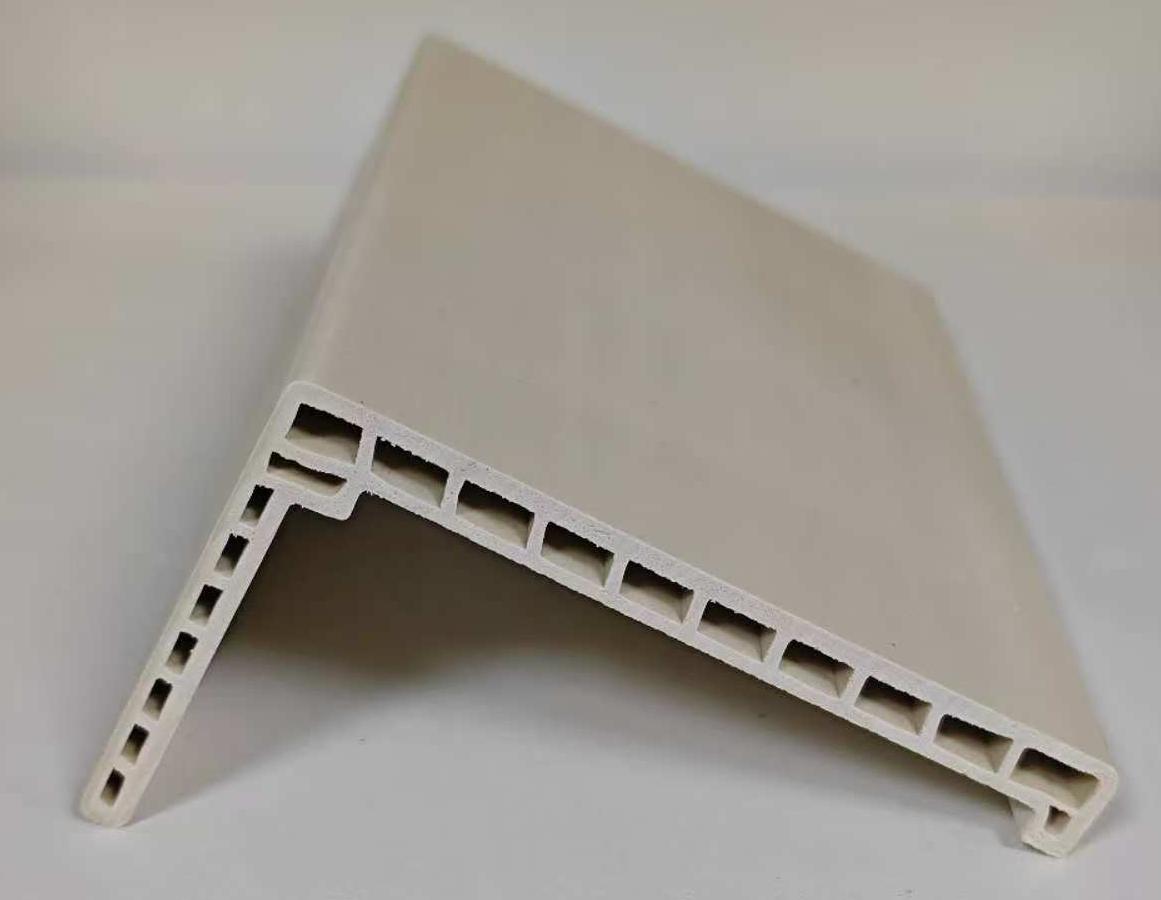 Off-White Flat WPC Door Architrave TrimDurable flat trim in three standard sizes with a smooth off-white finish, designed to pair with WPC door panels and complete frame-to-wall joints.View Product →
Matching Components Make or Break the Door
Many panel complaints are actually component complaints. A stiff panel in a weak frame will rub, stick, or fail at the hinge. A well-made panel with a poor seal will let moisture into the core. That is why we recommend planning the panel, frame, architrave, seal, hinge, and lock as one system. The frame carries the weight and keeps the door in line; the architrave covers the wall joint; the seal controls draughts and moisture; the hinges and lock determine daily feel and security.
For door makers, buying these parts from one source can reduce fitting problems and simplify color matching. Our A-type WPC door frame for 40 mm doors is available in 100, 140, 180, and 220 mm widths, which covers many standard wall conditions.
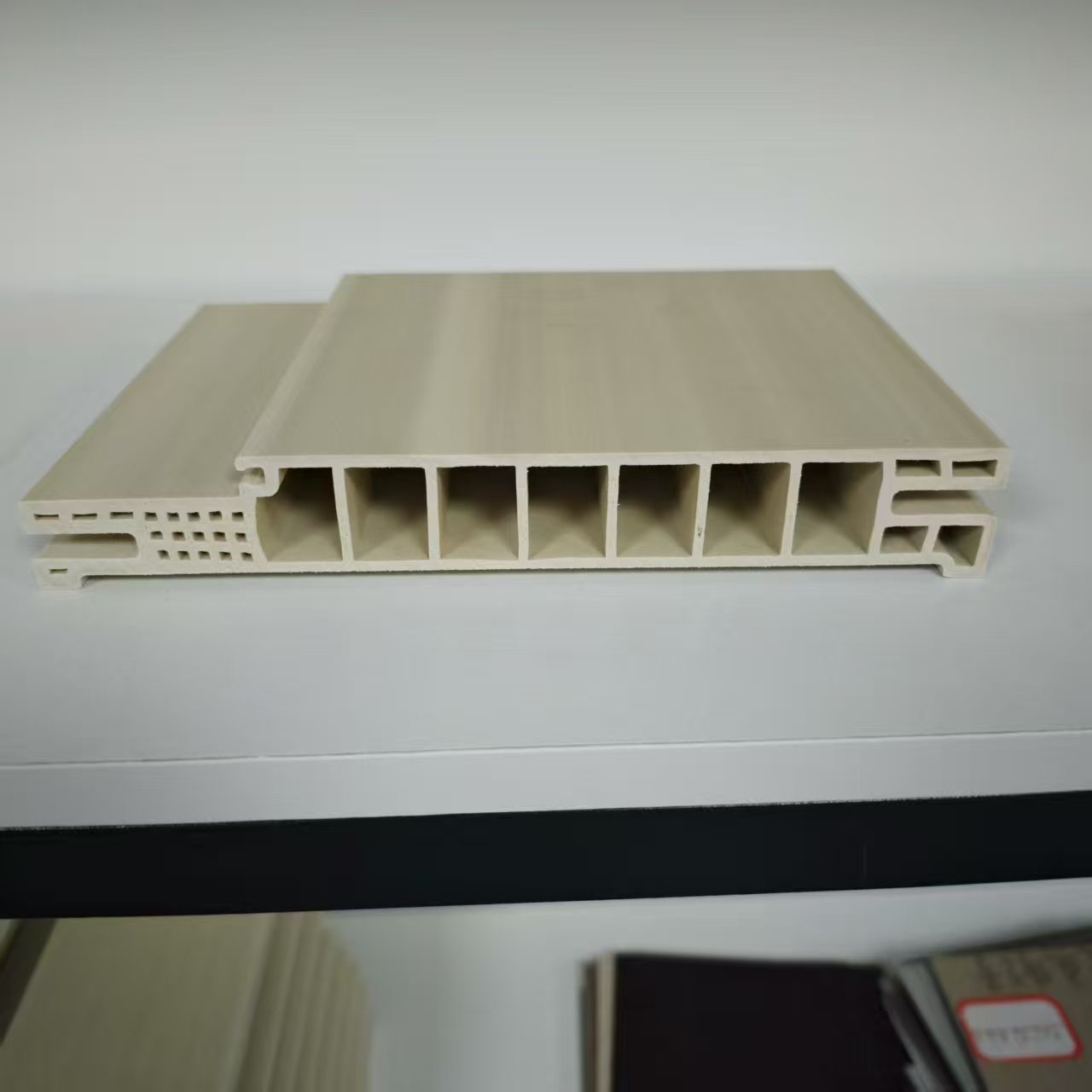 A-Type WPC Door Frame for 40 mm DoorsDurable composite frame available in four widths for 40 mm and 45 mm panels, supporting coordinated door systems in residential and commercial installations.View Product →
Quality Checks Before You Order
Before placing a bulk order, ask for a pre-production sample and check the details that matter on site:
- Panel density and weight consistency.
- Edge tightness and surface adhesion.
- Color and texture against the approved sample.
- Flatness after conditioning.
- Screw-holding and hinge performance.
- Moisture behavior after a simple water-bead test.
- Packaging and corner protection for export.
A supplier’s factory is part of the product. If you can, review the production environment, raw material control, and packing line. Our factory page gives a closer look at our WPC door and panel production setup. The goal is not to find the cheapest panel on the quotation; it is to find a panel that behaves the same way in the first container and the fifth.
A Practical Starting Point
WPC door panels are a strong fit for interior doors where moisture, stability, and consistent finish matter. They are not a universal replacement for every door material, and they reward careful specification. Focus on formulation, density, edge sealing, and component compatibility rather than a single headline claim. If you keep those basics in view, a WPC panel can be a reliable, good-looking part of a door system for years.


