


 English
 中文简体
中文简体
 عربى
عربى

Content
- 1 What Makes a WPC Flat Door Different from a Standard Door
- 2 WPC Flat Door Construction: Solid Core vs Hollow Core
- 3 Surface Finish Options for WPC Flat Doors
- 4 How WPC Flat Doors Compare to Wood, MDF, and PVC
- 5 Where WPC Flat Doors Are Best Used
- 6 Key Specifications to Check Before Buying a WPC Flat Door
- 7 WPC Flat Door Installation: Steps and Common Mistakes
- 8 Maintenance and Expected Service Life of WPC Flat Doors
What Makes a WPC Flat Door Different from a Standard Door
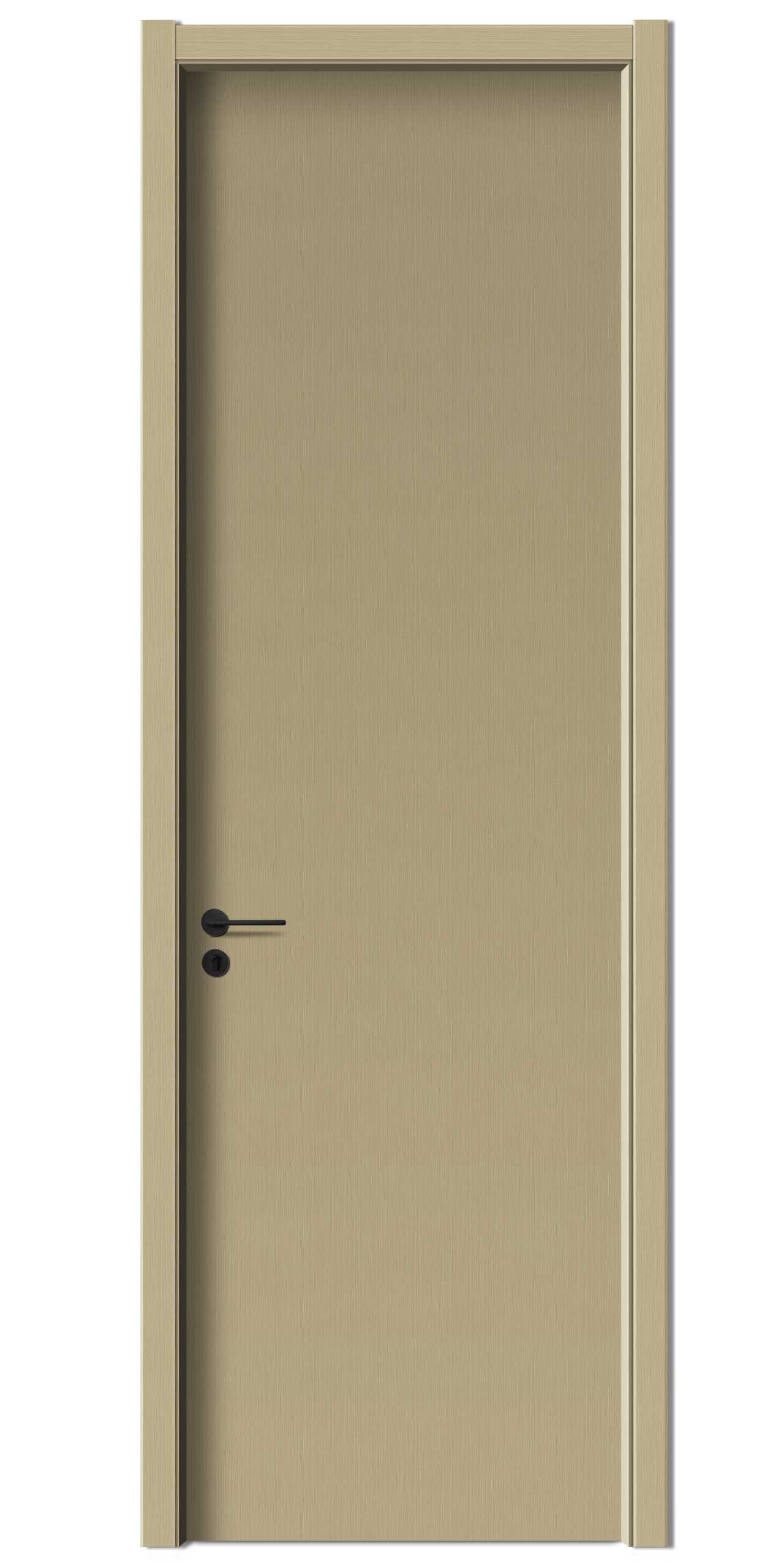
A WPC flat door — also called a wood plastic composite flush door — is an interior door with a completely smooth, uninterrupted face on both sides, made from a composite material that combines wood fiber with thermoplastic polymers such as PVC, polyethylene (PE), or polypropylene (PP). Unlike a panelled door, which has raised or recessed sections framed by rails and stiles, a flat door presents an entirely level surface from edge to edge. The WPC flat door format is the dominant choice in contemporary and minimalist interior design because the clean, unbroken surface works across a wide range of finishes, from matte lacquer to wood-grain laminate to high-gloss foil.
What distinguishes the WPC composite door from traditional flush doors made of MDF or hollow timber is its material behaviour under real-world conditions. MDF and solid wood both respond to changes in moisture and temperature — swelling in humid environments, shrinking in dry conditions, eventually warping, cracking, or rotting in consistently wet spaces like bathrooms and kitchens. The thermoplastic polymer content of WPC makes the panel non-porous. It does not absorb water, does not swell, and does not provide a medium for mould, mildew, or termite activity. These are not marketing claims — they follow directly from the material chemistry. A door that doesn't absorb water cannot warp from water. That single property explains why WPC flat doors have largely displaced solid wood and MDF flush doors in bathroom and kitchen applications across residential and commercial construction.
The material also contains no formaldehyde-based binders. Traditional MDF uses urea-formaldehyde or melamine-formaldehyde resin to hold the wood fibre matrix together — resins that off-gas formaldehyde into the indoor environment for months or years after installation. WPC composite panels are bonded through the thermoplastic polymer matrix itself, eliminating the chemical binder entirely. For bedrooms, children's rooms, hospitals, and schools — environments where occupants spend long periods in close proximity — the zero-formaldehyde characteristic is a meaningful health advantage.
WPC Flat Door Construction: Solid Core vs Hollow Core
WPC flat doors are manufactured in two primary structural configurations: solid (full) core and hollow core. Each has a distinct performance profile and is suited to different applications. Understanding the difference between them is essential before specifying or purchasing.
Solid Core WPC Flat Doors
A solid WPC flat door is extruded or moulded from a dense, homogeneous WPC board throughout its full thickness — typically 35 mm to 45 mm — with no internal voids. The result is a heavy, rigid panel with excellent structural integrity and sound attenuation. Solid WPC doors can weigh significantly more than hollow alternatives — often 25 kg to 40 kg depending on door size and thickness — which places higher demands on hinge selection and door frame strength. The increased mass directly improves acoustic performance: solid WPC flat doors achieve sound insulation values in the range of 30 to 38 dB, making them appropriate for spaces where sound privacy matters, such as offices, hotel rooms, hospital wards, and master bedrooms. The solid core also provides better screw withdrawal strength, meaning locks, hinges, and other hardware can be fitted securely without the risk of material failure around fixings.
Hollow Core WPC Flat Doors
Hollow WPC flat doors use an extruded WPC shell — typically with multiple internal hollow chambers running the length of the door — with or without an internal foam fill (polyurethane or XPS foam are the quality options). The hollow construction reduces weight substantially: a standard hollow WPC interior door may weigh 8 kg to 15 kg, making it much easier to handle during installation and reducing the load on door frames in timber stud or lightweight partition walls. Cost is generally lower than solid core alternatives, which makes hollow WPC the dominant choice for high-volume residential interior door applications — bedrooms, living spaces, utility rooms — where acoustic performance requirements are moderate. Be aware that quality varies significantly in this segment: some low-cost hollow WPC doors have extremely thin shell walls that provide minimal rigidity and poor screw holding capacity. A simple tap test — knocking on the door face — reveals whether the core has adequate fill; a solid, dense sound indicates good infill, while a paper-thin hollow echo signals a shell that is too thin for reliable hardware installation.
Structural Comparison at a Glance
| Feature | Solid Core WPC Flat Door | Hollow Core WPC Flat Door |
|---|---|---|
| Typical Thickness | 35 mm – 45 mm | 35 mm – 45 mm |
| Approximate Weight | 25 kg – 40 kg | 8 kg – 15 kg |
| Sound Insulation | 30 – 38 dB | 20 – 28 dB |
| Screw Holding Capacity | Excellent | Moderate (depends on fill) |
| Best Application | Main doors, offices, hotels, hospitals | Bedrooms, living rooms, low-traffic interiors |
| Cost | Higher | Lower |
| Installation Effort | Requires heavy-duty hinges and frame | Standard hinges; lightweight handling |
Surface Finish Options for WPC Flat Doors
The flat, unbroken surface of a WPC composite door makes it an excellent substrate for a wide range of surface finishes, and the finish you choose affects not just the visual result but also surface hardness, resistance to abrasion and cleaning agents, and compatibility with your interior design scheme. Most WPC flat doors are available with several factory-applied surface options.
PVC Film Laminate
PVC laminate is the most widely used surface finish on WPC flat interior doors. The film is thermally bonded to the WPC panel surface, producing a smooth, hard-wearing skin that resists everyday abrasion, moisture, and most common cleaning agents. Wood-grain PVC films replicate the visual texture of real timber species convincingly and are available in hundreds of colour and grain combinations. Solid-colour PVC laminates — white, grey, cream, and anthracite are popular — provide the clean, contemporary look associated with modern minimalist interiors. PVC-laminated WPC flat doors require no painting, no sealing, and minimal maintenance beyond routine wiping with a damp cloth.
Melamine Surface
Melamine-surfaced WPC flat doors feature a decorative paper layer saturated with melamine resin, pressed onto the door face under heat and pressure. The result is a hard, flat surface with good scratch resistance and a matte appearance. Melamine finishes are typically less expensive than PVC laminates and available in a wide range of woodgrain and solid-colour patterns. The limitation is that melamine can chip at edges if impacted, which requires careful handling during installation and careful edge protection in service.
Paint-Ready (Primed) Surface
Some WPC flat doors are supplied with a factory-applied primer coat — a smooth, paint-ready surface that accepts water-based or oil-based topcoats without the adhesion problems that can occur when painting directly over PVC or melamine surfaces. This option gives the specifier or end user complete control over the final colour and sheen level, making it popular for high-end residential projects where exact colour matching to other interior finishes is required. WPC material bonds well with acrylic paint systems specifically formulated for composite substrates; standard wood paints will also adhere if the surface is lightly sanded first.
High-Gloss Lacquer or UV Coating
For premium residential and commercial applications, WPC flat doors can be factory-finished with a high-gloss lacquer or UV-cured coating applied to a PVC laminate base. The mirror-like surface quality achievable with this treatment suits luxury hotel corridors, high-end residential interiors, and branded retail environments. The UV-cured surface is highly durable and resistant to yellowing — a weakness of some polyurethane lacquer systems used on wood doors over time. The main practical consideration is that high-gloss surfaces reveal fingerprints and minor surface marks more readily than matte or satin finishes, which may increase cleaning frequency in high-traffic areas.
How WPC Flat Doors Compare to Wood, MDF, and PVC
When specifying interior flush doors, buyers typically evaluate WPC against solid wood, MDF flush doors, and full-PVC alternatives. Each material has a distinct performance profile, and the right choice depends on the specific combination of moisture exposure, budget, acoustic requirement, and design preference in your project.
| Property | WPC Flat Door | Solid Wood Flush Door | MDF Flush Door | Full PVC Door |
|---|---|---|---|---|
| Moisture Resistance | Excellent — non-porous | Poor — swells and warps | Poor — absorbs moisture | Excellent |
| Formaldehyde Emissions | Zero | Low to moderate | Moderate to high | Zero |
| Termite Resistance | Excellent | Poor | Poor | Excellent |
| Sound Insulation | Good (solid core: 30–38 dB) | Good (solid: 30–38 dB) | Moderate | Low |
| Structural Strength | Good to Excellent | Excellent | Moderate | Low to Moderate |
| Screw Holding Capacity | Good | Excellent | Moderate | Weak |
| Maintenance | Very Low | High (painting, sealing) | Moderate | Very Low |
| Design Options | Wide (laminates, paint, CNC) | Wide (paint, veneer) | Wide (paint, laminate) | Limited |
| Typical Lifespan | 25 – 50 years | 15 – 25 years | 10 – 15 years | 15 – 20 years |
| Cost | Medium | High | Low to Medium | Low |
The summary comparison shows that WPC flat doors occupy the strongest overall position across the attributes that matter most in modern interior applications: moisture resistance, long service life, low maintenance, and zero formaldehyde emission. The weakness relative to solid wood is screw-holding capacity in hollow-core variants, which is managed by selecting an adequately dense fill material and using appropriately sized fixings.
Where WPC Flat Doors Are Best Used
The WPC flush door's combination of moisture resistance, dimensional stability, and design flexibility makes it appropriate across a wider range of applications than most buyers initially expect. The following breakdown covers the environments where it performs at its best and why.
- Bathrooms and en-suites: The definitive application for WPC flat doors. Timber and MDF flush doors in bathroom environments typically deteriorate within 5 to 10 years — swelling at the base, delaminating around the frame, and eventually rotting if moisture penetrates the edge. A WPC composite bathroom door eliminates this replacement cycle entirely. The non-porous surface also resists mould growth on the door face, which is a hygiene benefit in spaces that regularly accumulate condensation.
- Kitchen doors and utility rooms: Kitchens generate steam, condensation, and exposure to cleaning chemicals that degrade wood and MDF surfaces over time. WPC flat doors withstand these conditions without surface degradation, and the smooth, non-porous surface is easy to wipe down — important in a food preparation environment.
- Bedrooms and children's rooms: The zero-formaldehyde emission makes WPC flat doors the safest material choice for sleeping environments, particularly for children, where prolonged exposure to indoor air quality matters most. Hollow-core WPC flat doors are cost-effective for this application and provide adequate sound privacy for standard residential use.
- Hotels and hospitality: Hotel corridors and room entries require doors that withstand high traffic, repeated cleaning with commercial disinfectants, and occasional impact — all while maintaining a consistent, professional appearance. Solid-core WPC flat doors with PVC laminate or UV-lacquered finishes handle these demands, and the moisture resistance is valuable in hotel bathrooms where door frames are routinely exposed to shower steam.
- Hospitals, clinics, and schools: Healthcare and educational environments prioritise hygiene and durability. The non-porous, antibacterial-compatible surface of WPC flat doors can be cleaned with hospital-grade disinfectants repeatedly without surface degradation — a requirement that MDF and timber flush doors cannot reliably meet over an extended service life.
- Office partitions and commercial interiors: For office fit-outs where a clean, contemporary aesthetic is required alongside practical durability, WPC flat doors in solid-colour or wood-grain laminate provide a professional finish with the solid-core acoustic performance needed for meeting rooms and private offices.
Key Specifications to Check Before Buying a WPC Flat Door
WPC flat doors vary considerably in quality across the market. Specification details that are easy to overlook at the purchasing stage have significant impact on both the installation experience and the long-term service performance of the door. These are the parameters to verify before committing to a purchase.
Panel Density
Density is one of the most reliable indicators of WPC door quality and directly affects structural rigidity, screw withdrawal strength, and acoustic performance. Quality WPC flat door panels have densities in the range of 600 kg/m³ to 800 kg/m³. Below this range, the panel is likely under-filled with thermoplastic or contains excessive foaming, which reduces strength and makes hardware installation difficult. A reputable supplier will provide a density specification in the product datasheet; a door sold without stated density data or at an unusually low price is worth scrutinising carefully before bulk ordering.
Water Absorption Rate
Water absorption rate for quality WPC flat door panels should be below 0.5%, and premium products achieve below 0.1%. This specification directly confirms the waterproofing claim and is measurable through standardised testing. In humid climates or wet environments, the water absorption rate is the single most important technical specification to verify — a door with 5% or higher water absorption will swell in a bathroom environment regardless of what its marketing describes.
Edge Banding and Sealing
The face surfaces of a WPC door are inherently moisture-resistant, but the cut edges — top, bottom, and sides — expose the internal structure and can allow water ingress in hollow-core designs if left unsealed. Quality WPC flat doors feature 1 mm to 2 mm PVC edge banding applied to all four edges, thermally bonded and flush with the door face. Inspect edge banding quality on sample doors before ordering in volume: well-applied edge banding sits perfectly flush, with no lifting at the corners and no visible adhesive squeeze-out. Poorly applied edge banding lifts within months and allows the moisture infiltration it was designed to prevent.
Thickness
Standard WPC flat doors for interior residential applications are typically supplied at 35 mm thickness. Higher-end specifications use 40 mm or 45 mm — the additional thickness adds rigidity, improves acoustic performance, and provides more material depth for lock mortices and hardware installation. For main entrance applications or heavy commercial use, a minimum of 40 mm solid-core WPC is recommended. Confirm the stated thickness is the actual door panel thickness — not including any decorative frame or architrave — to ensure compatibility with the door frame rebate.
Hardware Compatibility
WPC flat doors accept standard mortice locks, cylindrical latches, hinges, and door closers — the same hardware used on timber and MDF flush doors. The key installation difference is that WPC material requires pilot holes before fastener insertion to prevent cracking, particularly in hollow-core designs. Use stainless steel or galvanized fixings rather than uncoated steel, which can corrode in humid environments and stain the surrounding material. Three hinges are recommended for solid-core WPC flat doors due to their higher weight; two hinges are typically adequate for hollow-core variants in standard residential sizes.
WPC Flat Door Installation: Steps and Common Mistakes
WPC flat doors install using the same general process as timber flush doors, but there are several material-specific considerations that affect the quality and longevity of the installation. Most installation problems arise from ignoring these details.
Correct Installation Steps
- Check the door opening dimensions first: Measure the rough opening height, width, and depth before the door arrives on site. WPC flat doors can be manufactured to custom sizes, but cutting a pre-laminated WPC door on site risks chipping the surface finish — particularly on PVC-laminated or high-gloss UV-coated doors. Order to size wherever possible and allow a 2 mm to 3 mm clearance gap around the door leaf for fitting.
- Use a matching WPC or composite door frame: Fitting a WPC flat door into a timber frame in a high-moisture environment undermines the door's performance — the timber frame will deteriorate while the door remains intact. Matching WPC door frames ensure consistent moisture resistance across the complete door assembly. Standard WPC frame profiles are available in widths from 70 mm to 150 mm and thicknesses from 60 mm to 120 mm.
- Drill pilot holes before all fastener insertion: WPC material is denser than MDF but more brittle at the surface than solid timber. Driving screws without pilot holes risks cracking the face layer or the edge banding. Drill pilots at the correct diameter for the screw shank and use self-drilling screws where possible for cleaner results.
- Position hinges correctly: For solid-core WPC flat doors, use three hinges — positioned at the top, bottom, and centre of the hinge stile. For a 2 m door, a standard positioning is 150 mm from the top, 200 mm from the bottom, and at the mid-point. Heavier solid-core doors may benefit from four hinges. Use stainless steel ball-bearing hinges rated for the door weight.
- Seal the bottom edge: Even in non-bathroom installations, applying a PVC or aluminium threshold strip or door bottom seal reduces the risk of moisture creeping under the door and into contact with the bottom edge. In bathroom applications this is essential — standing water on the floor in contact with any part of the door frame or threshold will eventually penetrate even well-banded edges if left unsealed.
Installation Mistakes to Avoid
- Cutting WPC doors without proper carbide-tipped blades produces chipping and rough edges that require remediation and look unprofessional.
- Fitting WPC flat doors without edge banding on any field-cut edges — bottom trimming in particular — leaves the cut end face unprotected and vulnerable to moisture ingress.
- Using standard steel screws in high-humidity bathroom or kitchen applications causes rust staining around fixings within one to two years.
- Hanging a heavy solid-core WPC flat door on a lightweight timber stud frame without reinforcing the stud at hinge positions leads to hinge pullout under repeated use.
- Stacking WPC flat doors flat during storage on site without bearer strips under each door causes bowing — particularly in hollow-core variants. Store vertically against a wall or stacked flat on bearer strips at maximum 1,200 mm height with the heaviest door on the bottom.
Maintenance and Expected Service Life of WPC Flat Doors
One of the most practical advantages of a WPC composite flat door is its near-zero maintenance requirement over its service life. Unlike solid timber doors that require periodic repainting or re-sealing to maintain weather resistance and appearance, a WPC flat door with a factory-applied surface finish is essentially maintenance-free from day one.
Routine cleaning requires nothing more than a soft cloth dampened with water and mild detergent. The non-porous surface resists most household chemicals including disinfectants, diluted bleach, and standard bathroom cleaners — making WPC flat doors particularly well-suited to healthcare settings where surfaces are cleaned frequently with aggressive agents. Avoid abrasive cleaning pads, solvents (acetone, paint stripper), or high-pressure washing at close range, all of which can damage the surface laminate regardless of how robust the underlying WPC panel is.
For minor surface scratches on PVC-laminated WPC flat doors, touch-up kits with matching colour filler are available from most manufacturers. For deeper damage to the door face, replacement of the full door leaf is typically more cost-effective than surface repair — the panel cost on most interior WPC flat doors is modest relative to the labour cost of a patch repair that may remain visually obvious.
Quality WPC flat doors from reputable manufacturers are rated for service lives of 25 to 50 years under normal interior use conditions — significantly longer than the 10 to 15 years typically achieved by MDF flush doors in humid environments before surface delamination, swelling, or structural failure makes replacement necessary. This extended lifespan means that the higher initial cost relative to MDF is recovered within a few years through avoided replacement costs, particularly in bathrooms and kitchens where MDF flush doors deteriorate most rapidly.


