


 English
 中文简体
中文简体
 عربى
عربى

Content
- 1 What Is a WPC Flat Door?
- 2 How WPC Flat Doors Are Made: Material and Construction
- 3 Key Advantages of WPC Flat Doors Over Traditional Door Materials
- 4 WPC Flat Door vs. Solid Wood vs. HDF vs. PVC Door: How They Compare
- 5 Common Applications and Where WPC Flat Doors Work Best
- 6 Surface Finishes and Styles Available for WPC Flat Doors
- 7 What to Check Before Buying a WPC Flat Door
- 8 Installation Tips for WPC Flat Doors
- 9 How Long Do WPC Flat Doors Last and What Affects Their Lifespan?
What Is a WPC Flat Door?
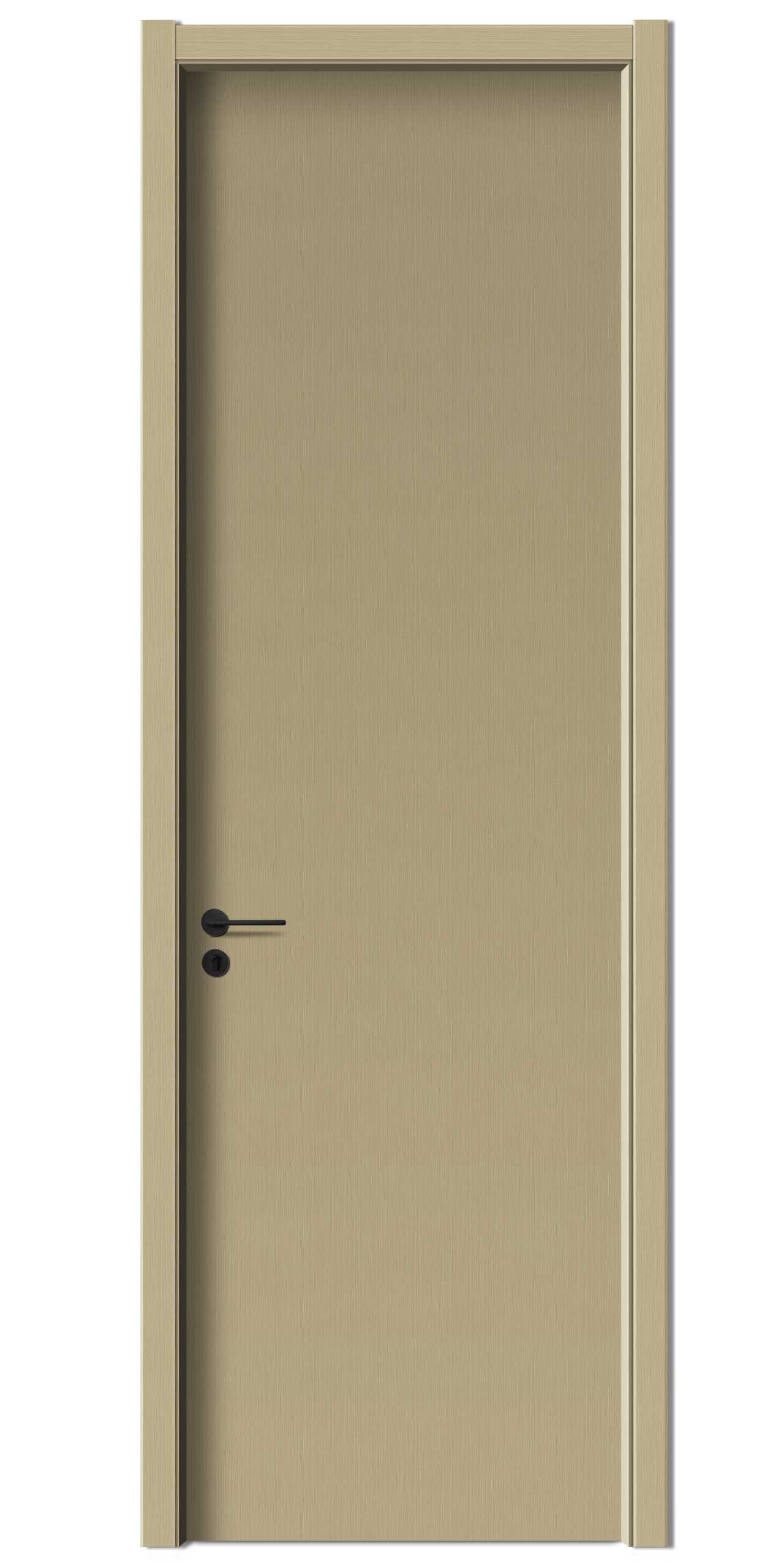
A WPC flat door is a flush-surface interior door manufactured from wood plastic composite (WPC) — a material made by blending wood fiber or wood flour with thermoplastic polymers such as PVC, polyethylene, or polypropylene, along with various additives for stabilization, foaming, and surface finish. The "flat" designation refers to the door's smooth, uninterrupted surface profile, which contrasts with paneled or molded doors that have raised or recessed decorative sections. WPC flat doors present a clean, contemporary face on both sides, making them a popular choice for modern interior design schemes where simplicity, uniformity, and a seamless aesthetic are priorities.
Unlike solid wood doors, which are milled from timber and subject to the natural limitations of that material, WPC flat doors are produced through an extrusion or compression molding process that yields a highly consistent, dimensionally stable product. The composite core is typically foamed during manufacturing to reduce weight while maintaining structural rigidity, and the outer surfaces are finished with a variety of decorative treatments — PVC film wrapping, melamine paper lamination, paint, or wood veneer — to achieve the desired color, texture, and appearance. The result is a door that looks and functions like a premium interior door but is engineered to resist moisture, insects, and dimensional change in ways that natural wood cannot.
How WPC Flat Doors Are Made: Material and Construction
Understanding how WPC flat doors are constructed helps clarify why they perform differently from both solid wood and hollow-core alternatives, and why the specific formulation and manufacturing process used by a supplier matters so much to the quality of the finished product.
The WPC Core Composition
The core of a WPC flat door is a blended composite material in which wood-derived filler — typically 30% to 70% by weight — is combined with a thermoplastic binder. The wood content contributes stiffness, dimensional stability, and a degree of nail and screw-holding ability similar to natural wood. The plastic binder — most commonly PVC in interior door applications — encapsulates the wood fibers, making them impermeable to water and resistant to biological degradation. Chemical additives in the formulation include foaming agents (to create a lightweight cellular structure within the core), stabilizers (to protect the PVC from thermal degradation during extrusion), lubricants (to improve processability), and impact modifiers (to prevent brittleness at low temperatures). The precise balance of these ingredients determines the density, hardness, flexibility, and durability of the finished door core.
Manufacturing Process: Extrusion and Pressing
Most WPC flat door blanks are produced by one of two manufacturing routes. In the extrusion process, the blended WPC compound is fed into a twin-screw extruder where it is heated, melted, and forced through a die shaped to the cross-section of the door slab — typically a rectangle with a cellular foam interior and denser outer skins. The extruded profile is then cooled in a calibration table, cut to length, and sent for surface finishing. In the pressing (or hot compression molding) process, WPC compound is loaded into a mold and subjected to heat and pressure simultaneously, producing a door blank with a more uniform density distribution and a smoother initial surface. Both methods can produce high-quality WPC flat door blanks; the choice depends on production volume, equipment investment, and the specific performance targets for the door.
Surface Finishing Options
The bare WPC door blank is structurally complete but visually plain. Surface finishing transforms it into a finished product with the desired appearance. The most widely used finishing method for WPC flat doors is PVC film wrapping, in which a thermally activated adhesive bonds a printed and textured PVC film to all exposed surfaces of the door. PVC films are available in hundreds of colors and wood-grain textures, and high-quality films closely replicate the look and feel of real wood at a fraction of the cost. Melamine paper lamination offers a harder, more scratch-resistant surface at a lower cost than PVC film and is commonly used on doors destined for commercial or high-traffic environments. Real wood veneer lamination — applying a thin slice of genuine timber over the WPC core — produces a surface with the authentic visual and tactile character of solid wood while retaining the dimensional stability benefits of the composite core.
Key Advantages of WPC Flat Doors Over Traditional Door Materials
WPC flat doors have grown rapidly in market share over the past decade because they deliver a combination of performance properties that neither solid wood nor traditional hollow-core doors can match across all relevant criteria. The following advantages explain why architects, interior designers, contractors, and homeowners are increasingly specifying WPC flush doors for interior applications.
- Waterproof and moisture-resistant: The plastic binder in the WPC composite encapsulates all wood fibers, preventing water absorption. WPC flat doors do not swell, warp, or delaminate when exposed to high humidity — a critical advantage in bathrooms, kitchens, laundry rooms, and any space where moisture levels are elevated. This is one of the most significant limitations of solid wood interior doors, which require careful finishing maintenance and will eventually distort in persistently damp environments.
- Termite and insect resistant: Because the wood fiber in a WPC composite is fully encased in plastic, it is inaccessible to termites, wood-boring beetles, and other wood-destroying insects. In regions where termite infestation is a significant risk, WPC flat doors eliminate a serious vulnerability that solid wood doors carry throughout their service life.
- Dimensional stability: WPC composite does not expand and contract with seasonal changes in temperature and humidity in the way that solid wood does. WPC flat doors do not require annual adjustment of hinges or latches to compensate for seasonal movement, and they maintain a consistent fit in their frames throughout the year — particularly important in climates with large seasonal temperature and humidity swings.
- Sound insulation: The dense, mass-loaded nature of a WPC composite core provides significantly better sound insulation than hollow-core doors. WPC flat bedroom doors are popular precisely because they offer meaningful acoustic separation between rooms, improving privacy and reducing noise transfer in open-plan homes and apartment buildings.
- Easy maintenance: WPC flat doors require no painting, oiling, or varnishing throughout their service life. Surface cleaning with a damp cloth and mild detergent is all that is needed for routine maintenance. This low-maintenance characteristic is a significant practical advantage in rental properties, hospitality environments, and homes where regular maintenance is inconvenient or impractical.
- Consistent quality and availability: Because WPC flat doors are manufactured rather than grown, they are free from the knots, grain variation, checks, and other natural defects that affect solid wood doors. This consistency makes them easier to specify, procure, and install at scale — a major advantage for large residential or commercial projects requiring hundreds of identical doors.
WPC Flat Door vs. Solid Wood vs. HDF vs. PVC Door: How They Compare
Choosing between WPC flat doors and competing interior door materials requires understanding where each material excels and where it has limitations. The comparison table below covers the most important practical criteria for interior door selection.
| Criteria | WPC Flat Door | Solid Wood Door | HDF/MDF Door | Full PVC Door |
| Moisture resistance | Excellent | Poor–Moderate | Poor | Excellent |
| Dimensional stability | Excellent | Moderate | Moderate | Good |
| Sound insulation | Good–Excellent | Excellent | Good | Poor–Moderate |
| Termite resistance | Excellent | Poor | Moderate | Excellent |
| Screw holding ability | Good | Excellent | Moderate | Poor |
| Visual appearance | Good–Excellent | Excellent | Good | Moderate |
| Maintenance requirement | Very low | High | Moderate | Very low |
| Relative cost | Medium | High | Low–Medium | Low–Medium |
Common Applications and Where WPC Flat Doors Work Best
WPC flat doors are suitable for a wide range of interior applications, but they are particularly well matched to environments where moisture resistance, low maintenance, and clean aesthetics are simultaneously important. Understanding where WPC flush doors deliver the most value helps in making the right specification decision for each room or project type.
Bathrooms and Wet Areas
Bathroom doors are among the most demanding applications for interior door materials because they are exposed to frequent humidity cycling — the rapid increase in moisture during showering or bathing and the subsequent return to ambient conditions. Solid wood and HDF doors in bathrooms will absorb moisture over time and begin to swell, distort, and eventually delaminate. WPC flat bathroom doors maintain their shape, their fit in the frame, and their surface finish indefinitely in these conditions, eliminating one of the most common maintenance headaches in residential and hotel bathroom environments.
Bedrooms and Living Spaces
In bedrooms, living rooms, and home offices, WPC flat panel doors offer a clean, modern aesthetic that suits contemporary interior design trends. The flat, seamless surface pairs well with flush skirting, frameless cabinetry, and minimal hardware, creating an uninterrupted visual plane that suits open-plan and minimalist interiors. The superior sound insulation of the dense WPC core compared to hollow-core alternatives is particularly valued in master bedrooms, children's rooms, and home study spaces where acoustic privacy improves the quality of the living environment.
Kitchens and Utility Rooms
Kitchen and utility room doors face not only moisture but also grease vapor, cleaning chemical exposure, and frequent physical contact. The smooth, non-porous surface of a WPC flat door is resistant to all of these: grease and cleaning products wipe off cleanly without penetrating the surface or damaging the finish, and the moisture-proof core is unaffected by the steam and condensation generated during cooking. In commercial kitchen and hospitality environments, WPC flush doors are increasingly replacing painted timber doors that require frequent repainting to maintain a hygienic, professional appearance.
Hotels, Apartments, and Commercial Interiors
For developers, property managers, and commercial fit-out contractors, WPC flat doors offer a compelling combination of consistent quality, competitive pricing, low lifetime maintenance cost, and a wide range of finish options that can be coordinated across an entire project. Hotel room doors, apartment corridor doors, and office suite doors specified in WPC composite maintain their appearance without periodic refinishing throughout long service cycles, reducing operational maintenance costs significantly compared to solid wood or painted HDF alternatives. The fire-retardant grades of WPC door available from specialist manufacturers also meet the fire door performance requirements of many commercial building codes when correctly specified and installed.
Surface Finishes and Styles Available for WPC Flat Doors
One of the practical strengths of WPC flat doors is the breadth of surface finish options available, which allows them to match almost any interior design direction from ultra-modern to traditionally inspired. The flat profile itself is a design statement — unadorned, clean, and contemporary — but the surface treatment applied to that profile determines the overall look of the door in the space.
- Wood-grain PVC film: The most widely used finish for WPC flat doors, available in dozens of species imitations including oak, walnut, ash, teak, cherry, and wenge. High-quality embossed PVC films replicate not just the color but the micro-texture of real wood grain, creating a convincing natural appearance at close inspection. These films are pre-finished and require no on-site painting or sealing.
- Solid color PVC film or paint: White, off-white, gray, black, and other solid colors are available for WPC flat doors intended for minimalist or contemporary interiors where a clean, uniform surface is preferred over wood-look aesthetics. Matte finishes have grown significantly in popularity for their non-reflective, refined appearance, particularly in Nordic and Japandi-style interiors.
- Real wood veneer: A thin slice of genuine timber — most commonly oak, walnut, or ash — is adhered to the WPC core surface and finished with clear lacquer or oil. This option delivers authentic wood character with the dimensional stability of the composite core. Real wood veneer WPC flat doors occupy the premium segment of the product range and are used where the authenticity of real wood grain is valued but the performance limitations of solid wood are not acceptable.
- High-gloss lacquer: High-gloss WPC flat doors — typically painted with UV-cured or polyurethane lacquer — create a highly reflective, lacquered surface similar to high-gloss kitchen cabinetry. This finish suits ultra-modern interiors and is particularly striking in deep colors such as charcoal, navy, and forest green. High-gloss surfaces show fingerprints and fine scratches more readily than matte or satin finishes and are best suited to areas with lower physical contact frequency.
- Textured and embossed surfaces: Beyond wood grain, WPC flat doors are available with linen, concrete, leather, and abstract texture embossments that add tactile interest to a flat-profile door without introducing the visual complexity of a paneled design. These finishes are growing in popularity for design-led residential and hospitality projects seeking distinctive interior detailing.
What to Check Before Buying a WPC Flat Door
Not all WPC flat doors are manufactured to the same standard, and the quality differences between products at different price points are significant. The following checklist covers the most important things to verify before committing to a purchase, whether you are buying a single door for a home renovation or specifying hundreds of doors for a large development project.
Core Density and Door Weight
Core density is the most reliable single indicator of WPC door quality. A higher-density core means more material per unit volume, which translates to better screw-holding performance, better sound insulation, greater impact resistance, and a more solid, premium feel when the door is operated. Ask the supplier for the door's density specification in kg/m³ or, more practically, weigh the door and calculate its density from the known dimensions. A quality WPC flat interior door should weigh noticeably more than a hollow-core HDF door of the same size. Very lightweight WPC doors are likely to have an excessively foamed, low-density core that will perform poorly in hinge and lock hardware retention.
Surface Film Adhesion and Thickness
The durability of the surface finish depends on both the thickness and quality of the film or laminate applied and the strength of the adhesive bond between film and core. Check the edges and corners of the door for any signs of film lifting, bubbling, or poor adhesion before accepting delivery. A quality PVC film on a WPC flat door should be at least 0.3mm to 0.5mm thick — thin films below this threshold are prone to cracking, chipping at door edges, and peeling under normal use conditions. Request the film thickness specification from the supplier and confirm it in writing for commercial projects.
Hardware Compatibility and Machining
WPC flat doors need to accept standard door hardware — hinges, mortise locks, handles, and door closers — with the same reliability as solid wood doors. Ask the supplier about the door's screw pull-out strength and whether the core is consistent enough to machine accurately for mortise lock pockets and hinge rebates without crumbling or cracking. Some WPC doors are supplied pre-machined for specific standard hardware sizes; others are supplied as blanks for on-site machining. Confirm that the door dimensions and hardware preparation are compatible with the frame, architrave, and hardware you are using before ordering.
Fire and Safety Ratings
Standard WPC flat doors are not fire-rated unless specifically tested and certified. For applications where a fire door is required by building regulations — such as doors to garages, utility rooms, or stairwells in residential buildings, or corridor doors in commercial or multi-occupancy premises — you must specify a WPC door that has been independently tested and certified to the relevant fire door standard (such as FD30 or FD60 in the UK, E30/EI30 in Europe, or equivalent standards in other jurisdictions). Fire door certification covers not just the door leaf but the complete doorset including frame, hardware, and intumescent seals, all of which must be installed exactly as tested to maintain the certification.
Installation Tips for WPC Flat Doors
WPC flat doors are installed using the same techniques as standard interior timber doors, and experienced carpenters will find them straightforward to work with. A few material-specific considerations are worth noting to ensure a clean, trouble-free installation.
- Acclimatization: Although WPC flat doors are far more dimensionally stable than solid wood, it is still good practice to store them flat or vertically in the installation environment for 24 to 48 hours before fitting, allowing them to reach the ambient temperature of the space. This is especially important in heated buildings during winter or in air-conditioned environments where the temperature difference between storage and installation locations is significant.
- Cutting and trimming: WPC composite can be cut with standard woodworking tools — circular saws, jigsaws, and routers all work well. Use carbide-tipped blades for clean cuts, as the composite material is slightly more abrasive than softwood and will dull high-speed steel blades more quickly. When trimming the door to fit an opening, trim evenly from both sides where possible rather than removing all material from one edge to maintain balanced construction.
- Hinge specification: Use appropriately sized hinges for the door weight. WPC flat doors are typically heavier than hollow-core doors of the same dimensions, so do not undersize hinges. Three hinges are recommended for doors taller than 2000mm or heavier than 40 kg. Use stainless steel or zinc-plated hinges in bathroom or high-humidity applications to prevent corrosion staining on the door surface.
- Sealing cut edges: Where the door has been trimmed or machined, apply a bead of clear silicone sealant or edge seal tape to any exposed WPC core surfaces, particularly on the bottom edge of bathroom and kitchen doors. While the WPC composite itself is highly moisture resistant, the small amount of exposed wood fiber at cut surfaces can absorb moisture over very long periods without edge sealing.
- Frame and threshold clearance: Maintain standard clearance gaps — typically 2mm to 3mm on hinge and latch sides, 2mm on the head, and 8mm to 10mm above the floor finish — as you would for any interior door. Because WPC flat doors will not swell seasonally, the clearance set at installation will remain consistent, so there is no need to allow extra clearance for moisture-related expansion as you might with a solid wood door.
How Long Do WPC Flat Doors Last and What Affects Their Lifespan?
A quality WPC flat door installed correctly and used in a typical interior environment can be expected to last 15 to 30 years or more before requiring replacement. The composite core does not rot, does not attract insects, and does not undergo the progressive moisture-related degradation that limits the lifespan of solid wood and HDF doors in bathrooms and kitchens. The practical lifespan limiting factors for WPC flat doors are typically surface finish wear and hardware fatigue rather than structural deterioration of the door itself.
Surface film wear — scuffing, scratching, or peeling of the PVC film or laminate surface — is most likely to occur on high-contact areas such as around door handles, along the latch edge, and at the bottom of the door. Selecting a door with a thicker, higher-quality surface film significantly extends surface appearance life. Hardware fatigue — primarily hinge wear and loosening of lock hardware — can be addressed through periodic tightening and hardware replacement, both of which are straightforward on a WPC door with adequate core density. Doors installed in very high-traffic commercial environments may show surface wear within 10 years in these high-contact areas, while the same door in a low-traffic residential bedroom application would remain in excellent condition for considerably longer.


